
What Is a Silicone Baby Tableware Manufacturer?
A silicone baby tableware manufacturer is more than a factory producing baby feeding products. For global brands and importers, the right manufacturing partner should provide complete product development support, including material selection, product design, mold development, silicone molding, quality inspection, customization, packaging, and mass production.
As demand for reusable and durable baby feeding products continues to grow, many baby product brands are looking for manufacturers that can provide:
- Food-contact silicone material solutions
- Custom product development
- Private label services
- Stable production capacity
- Quality control systems
- Market-specific compliance support
For B2B buyers, choosing a silicone baby tableware manufacturer is not only about finding a supplier with competitive pricing. It is about finding a long-term production partner that can support product innovation, quality consistency, and market expansion.
Leadonex provides OEM and ODM silicone product manufacturing solutions, supporting customers from concept development and mold creation to silicone molding, inspection, customization, and packaging.
Learn more about Leadonex capabilities through the custom silicone manufacturing service.
Why Brands Choose Silicone Baby Tableware Products
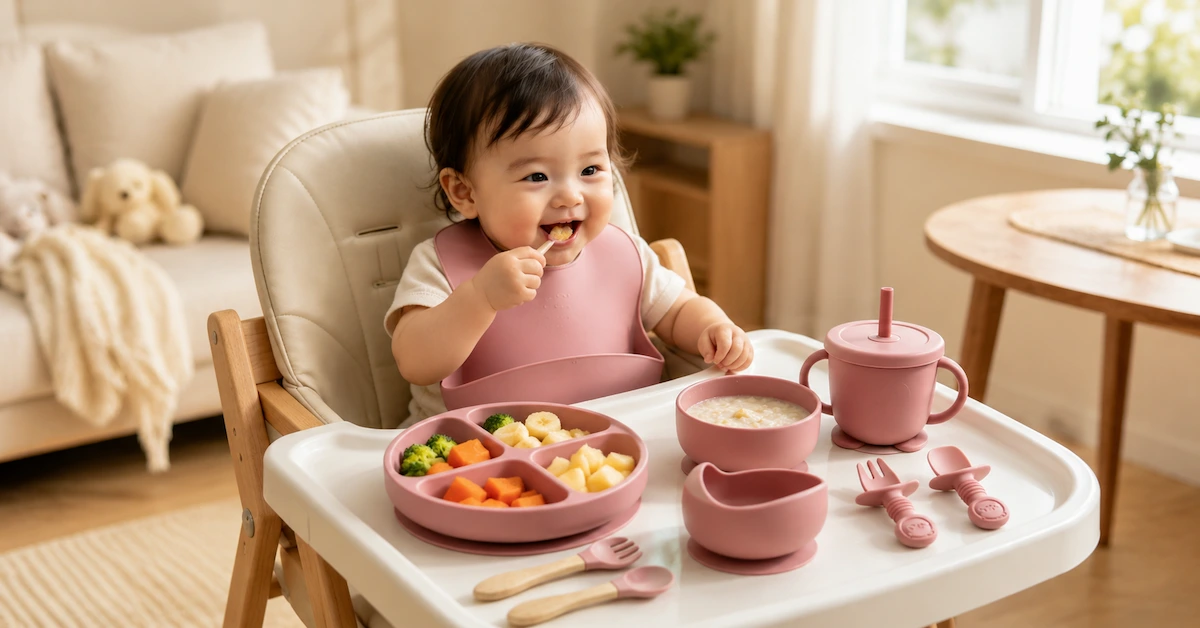
Silicone baby tableware has become popular among baby product brands because it combines flexibility, durability, and practical daily-use performance.
For professional buyers, understanding these advantages helps determine whether silicone products match their target market and product positioning.
Food Contact Silicone Material
Material selection is one of the most important factors when developing baby tableware products.
Professional buyers usually evaluate:
- Material composition
- Food-contact suitability
- Odor performance
- Heat resistance
- Durability
- Market compliance requirements
A reliable silicone baby tableware manufacturer should be able to provide appropriate material information and support testing requirements based on the target market.
For example, products sold in different regions may need to consider different food-contact regulations and testing requirements.
Buyers should avoid relying only on general claims such as “food grade silicone” and instead confirm:
- Intended application
- Market requirements
- Testing standards
- Documentation availability
Flexible and Durable Product Performance
Baby products are exposed to frequent daily use, washing, and handling.
Silicone baby tableware is commonly selected because it can provide:
- Flexible structure
- Good recovery after bending
- Resistance to daily wear
- Comfortable handling
- Easy cleaning characteristics
For brands, product durability directly affects customer satisfaction and repeat purchase potential.
A well-designed silicone feeding product should balance:
- Softness
- Structural stability
- Product safety
- User experience
Easy Cleaning and Daily Maintenance
Parents often prioritize products that are convenient to clean.
Silicone baby tableware designs commonly focus on:
- Smooth surfaces
- Simple structures
- Reduced food residue areas
- Dishwasher-friendly designs where applicable
For B2B buyers, these functional details can become important selling points when creating product descriptions, packaging, and marketing materials.
What Products Can a Silicone Baby Tableware Manufacturer Produce?
A professional silicone baby tableware manufacturer can support multiple product categories.
| Product Category | Common Application | OEM Possibilities |
|---|---|---|
| Silicone suction bowls | Baby feeding | Shape, color, logo, packaging |
| Silicone plates | Self-feeding | Compartments, size, design |
| Silicone bibs | Feeding protection | Color, pattern, branding |
| Silicone cups | Drinking training | Shape, handle, customization |
| Silicone spoons | Early feeding | Size, hardness, packaging |
| Silicone food containers | Storage and meals | Capacity, structure, branding |
For brands building a complete baby feeding product line, combining multiple products into a coordinated collection can improve retail presentation and brand recognition.
Silicone Suction Bowls and Plates
Suction bowls and plates are among the most common silicone baby tableware products.
Important development factors include:
- Bowl capacity
- Suction structure
- Base stability
- Edge design
- Material flexibility
- Cleaning convenience
For OEM projects, buyers may customize:
- Shape
- Color
- Compartment layout
- Logo
- Packaging
Silicone Baby Feeding Accessories
Beyond plates and bowls, brands may develop additional feeding accessories.
Examples include:
- Training cups
- Silicone spoons
- Storage containers
- Feeding sets
The product strategy depends on the target market, customer age range, and retail positioning.
How to Choose the Right Silicone Material for Baby Tableware?

Material selection affects product performance, manufacturing process, and market acceptance.
Silicone Hardness
Different products may require different hardness levels.
For example:
- Soft products may improve flexibility
- Firmer structures may improve stability
- Specific designs require balanced performance
The correct hardness depends on:
- Product structure
- User experience
- Manufacturing requirements
Silicone Quality and Consistency
For B2B production, consistency between batches is critical.
Buyers should consider:
- Material stability
- Color consistency
- Odor control
- Production repeatability
A professional manufacturer should have processes to control material quality from incoming inspection to final production.
OEM Customization Options for Silicone Baby Tableware
OEM allows brands to create products that match their market positioning.
Leadonex supports customization options including:
- Product structure
- Size
- Color
- Logo
- Packaging
- Mold development
Custom Product Design
OEM development can start from:
- Product concepts
- Reference samples
- 2D drawings
- 3D files
Engineering teams can evaluate:
- Manufacturing feasibility
- Mold structure
- Material requirements
- Product improvements
For new product development, early design evaluation can reduce unnecessary tooling changes.
Color Customization
Color is an important part of baby product branding.
Brands may customize:
- Product colors
- Product sets
- Packaging colors
Professional projects usually use standardized color references such as Pantone matching to improve production consistency.
Logo and Branding Customization
Private label baby products often require brand identification.
Common options include:
- Molded logos
- Embossed logos
- Debossed logos
- Printing
- Packaging labels
The best branding method depends on:
- Product structure
- Durability requirements
- Appearance expectations
- Cost considerations
Private Label Packaging Solutions
Packaging is part of the final customer experience.
OEM packaging options may include:
- Retail boxes
- Color sleeves
- Product labels
- Gift packaging
- Product sets
For brands entering retail channels, packaging should be considered together with product development rather than as a final step.
Silicone Baby Tableware Manufacturing Process
A reliable OEM process helps reduce development risks.
Step 1: Product Requirement Review
The manufacturer evaluates:
- Product concept
- Target market
- Material requirements
- Design drawings
- Quantity expectations
- Packaging needs
Step 2: Product Engineering
Engineers review:
- Structure
- Thickness
- Mold feasibility
- Manufacturing challenges
This stage helps identify potential production problems before tooling.
Step 3: Mold Development
For fully customized products, new molds may be required.
Mold development considers:
- Product geometry
- Production efficiency
- Expected volume
- Quality consistency
Step 4: Prototype and Sample Approval
Samples allow buyers to evaluate:
- Appearance
- Size
- Function
- Color
- Product experience
An approved sample becomes the reference standard for bulk production.
Step 5: Mass Production
After approval, products move into manufacturing.
Production control focuses on:
- Material consistency
- Molding conditions
- Product appearance
- Dimensional accuracy
Step 6: Inspection and Packaging
Before shipment, products should be inspected according to agreed specifications.
Quality Control for Silicone Baby Tableware Manufacturing
Quality control is one of the most important factors when selecting a silicone baby tableware manufacturer.
A professional QC system should include multiple stages.
Incoming Material Inspection
Check:
- Material specifications
- Batch information
- Required documentation
Production Inspection
Monitor:
- Product dimensions
- Surface quality
- Color consistency
- Mold defects
- Product deformation
Functional Testing
Depending on the product, inspection may include:
- Suction performance
- Structural stability
- Flexibility
- Product fit
- Cleaning performance
Final Product Inspection
Before shipment, confirm:
- Product appearance
- Quantity
- Packaging
- Labels
- Approved sample comparison
For brands, consistent quality is more valuable than receiving one perfect sample.
Compliance Considerations for Silicone Baby Tableware

Baby products require careful consideration of market requirements.
The correct compliance approach depends on:
- Product category
- Intended use
- Sales market
- Applicable regulations
For food-contact baby tableware, buyers commonly evaluate requirements related to:
- Food-contact materials
- Chemical migration
- Material safety
- Market-specific testing
In the United States, food-contact requirements depend on the specific substance, intended use, and conditions of use. Buyers should confirm applicable requirements rather than relying on general marketing statements.
For European markets, food-contact materials must follow applicable EU requirements, including Regulation (EC) No 1935/2004 for materials intended to contact food.
A professional silicone baby tableware manufacturer should help buyers understand which documents and testing are relevant for their target market.
How to Evaluate a Silicone Baby Tableware Manufacturer?
Choosing the right supplier requires more than comparing quotations.
| Evaluation Area | Questions to Ask |
|---|---|
| Manufacturing capability | Does the factory handle production internally? |
| OEM experience | Can they develop customized products? |
| Mold capability | Can they support new tooling? |
| Material control | Can they provide material information? |
| QC system | How is quality controlled during production? |
| Packaging | Can they support private label packaging? |
| Communication | How are design changes managed? |
| Production capacity | Can they support future growth? |
A strong supplier should provide both manufacturing capability and project management support.
Common Mistakes When Sourcing Silicone Baby Tableware
Choosing Only Based on Price
The lowest quotation may create problems related to:
- Material quality
- Production consistency
- Communication
- After-sales support
Developing Products Without Clear Specifications
Incomplete specifications can cause:
- Sample revisions
- Mold changes
- Additional costs
- Delayed launch
Ignoring Compliance Until Production
Compliance should be considered before production begins.
Late testing problems may result in:
- Product delays
- Additional costs
- Market entry problems
How to Request a Silicone Baby Tableware OEM Quote?
A detailed inquiry helps manufacturers provide accurate quotations.
Include:
- Product drawings or images
- Product dimensions
- Material requirements
- Color requirements
- Logo method
- Packaging requirements
- Order quantity
- Target market
- Required testing
Example:
“We need a custom silicone suction plate for the EU baby products market, with three compartments, custom color, molded logo, retail packaging, and an initial order quantity of 5,000 pieces.”
This information allows manufacturers to evaluate:
- Tooling requirements
- Material selection
- Production process
- Cost structure
- Lead time
For project evaluation, buyers can contact Leadonex through the contact page.
FAQ About Silicone Baby Tableware Manufacturer
1. What does a silicone baby tableware manufacturer do?
A silicone baby tableware manufacturer develops and produces silicone feeding products, including design support, mold development, production, inspection, customization, and packaging.
2. Can manufacturers create custom silicone baby products?
Yes. OEM manufacturers can develop customized products based on drawings, samples, or product concepts.
3. What silicone is suitable for baby tableware?
The suitable silicone depends on product requirements, intended use, and target market regulations. Buyers should confirm material specifications and testing requirements with manufacturers.
4. Can I add my own logo to silicone baby tableware?
Yes. Depending on product design, options may include molded logos, embossed logos, printing, and customized packaging.
5. What is the MOQ for OEM silicone baby tableware?
MOQ depends on product design, tooling requirements, colors, packaging, and production volume.
6. How long does custom silicone baby tableware development take?
Development time depends on product complexity, tooling requirements, sampling revisions, testing, and production planning.
7. What documents should I request from a silicone baby tableware supplier?
Buyers should request documents relevant to their market, including material information, testing reports, and compliance-related documentation where applicable.
8. Can silicone baby tableware manufacturers provide private label packaging?
Yes. Many OEM suppliers support customized packaging solutions including labels, retail boxes, and product sets.
Conclusion
Choosing the right silicone baby tableware manufacturer is an important decision for brands that want to build reliable baby feeding product lines.
The best manufacturing partner should provide more than production capacity. It should support:
- Product development
- Material selection
- Mold creation
- OEM customization
- Quality control
- Compliance planning
- Packaging solutions
Leadonex provides OEM and ODM silicone manufacturing solutions for global brands, supporting customized silicone products from concept development to finished production.
Whether you need private label baby feeding products, custom silicone tableware, or a complete OEM development partner, Leadonex can help transform your product ideas into scalable solutions.
Explore Leadonex silicone product solutions, learn more about OEM customization services, or contact the team through the Leadonex contact page to discuss your next silicone baby tableware project.