

The Evolution of Baking Molds in the Modern Culinary Industry
For decades, metal and plastic molds dominated commercial baking. Yet both materials come with inherent limitations: rusting, sticking, and inconsistent heat distribution. As professional and home baking standards rise, chefs and brands demand safer, longer-lasting, and more flexible tools.
This transition has positioned the silicone baking mold factory as a crucial player in the kitchenware supply chain—offering products that merge safety, creativity, and manufacturing precision.
Material Engineering Behind Food-Grade Silicone Molds
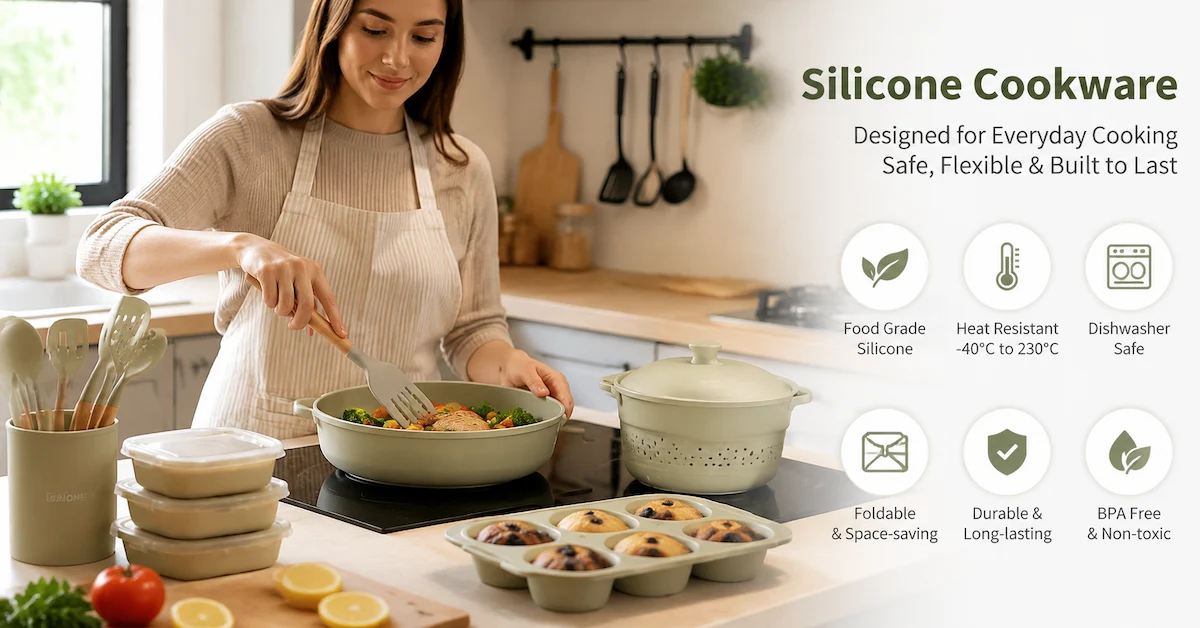
Food-grade silicone is not just a softer alternative—it’s a scientific leap forward. The cross-linked polymer structure gives it high elasticity, excellent temperature resistance (−40 °C to 230 °C), and zero chemical migration during heating.
At Leadonex, all silicone raw materials undergo FDA and LFGB certification, ensuring odorless, non-toxic, and deformation-free performance. This makes each mold reliable not only for cakes but also for pastries, chocolates, and frozen desserts.
Comparing Silicone Molds with Traditional Metal and Plastic Designs
| Feature | Silicone Baking Mold | Metal Mold | Plastic Mold |
|---|---|---|---|
| Heat Tolerance | Up to 230 °C | High but conducts unevenly | Softens above 100 °C |
| Surface Performance | Naturally non-stick | Needs coating | Sticks easily |
| Cleaning & Maintenance | Dishwasher-safe | Requires hand drying | Absorbs oils |
| Design Flexibility | Custom shapes & textures | Rigid | Limited molding depth |
| Shelf Life | 3–5 years | Prone to corrosion | Degrades faster |
These advantages explain why global brands increasingly partner with a silicone baking mold factory that can deliver consistent quality and creative freedom across product lines.
Manufacturing Precision: How Leadonex Turns Designs into Production Molds
Leadonex integrates advanced molding technologies and strict quality systems to guarantee accuracy and repeatability.
-
3D Mold Design: In-house engineers refine geometry for even heat flow and air release.
-
CNC Tooling: ±0.01 mm accuracy ensures precise cavity details.
-
Material Forming: Liquid silicone injection or solid compression molding depending on volume and texture needs.
-
Surface Finishing: Optional matte or gloss textures for different baking aesthetics.
-
Quality Inspection: Dimensional, tensile, and thermal cycle testing to simulate real kitchen conditions.
By maintaining all processes under one facility, Leadonex shortens lead times and preserves consistency across OEM projects.
Why Silicone Mold Production Requires True Engineering Discipline
Unlike simple plastic pressing, silicone molding demands thermal balance, curing control, and release optimization. Any inconsistency can result in bubbles, uneven surfaces, or warping.
Leadonex’s team applies industrial-grade thermal mapping and vacuum venting to eliminate such defects, ensuring each baking mold offers uniform thickness and flawless release—a key differentiator for professional kitchens and premium retail products.
Versatility Across Culinary and Branding Applications
Silicone molds are now used far beyond cakes—they serve in artisanal chocolate crafting, frozen desserts, energy bars, and promotional kitchen gift sets. Their flexibility and safe composition allow creative shapes, textures, and brand embossing.
Leadonex collaborates with culinary brands, retailers, and gift suppliers to produce molds tailored to seasonal collections, co-branded packaging, and small-batch innovations.
Choosing the Right Mold for Your Product Line
| Application | Recommended Mold Type | Leadonex Feature |
|---|---|---|
| Bakery & Patisserie | Round, square, or heart molds | Uniform heating, anti-stick surface |
| Chocolate & Confectionery | Shallow cavity designs | Gloss finish, fine detail control |
| Frozen Desserts | Flexible deep molds | Easy demolding under cold |
| Promotional Kitchenware | Custom logo molds | Branding emboss & packaging support |
Choosing the right material hardness, texture, and cavity geometry ensures consistency from prototype to mass production—something only an experienced silicone baking mold factory can guarantee.
Technical FAQs for Kitchenware Importers
Q1: Can silicone molds handle industrial ovens and freezers?
A1: Yes. Leadonex molds are tested from −40 °C to 230 °C and retain elasticity across repeated cycles.
Q2: Do you offer private label or small MOQ orders?
A2: Absolutely. Leadonex supports OEM/ODM customization with flexible quantities for new product launches.
Q3: How do you ensure molds remain odor-free after long use?
A3: Using platinum-cured silicone eliminates volatile residues, ensuring neutral smell even after extended baking.
Advancing Quality and Creativity in Global Bakeware Manufacturing
As baking evolves into both an art and a science, manufacturers must balance food safety, design freedom, and production economics.
Leadonex combines certified materials, precision tooling, and global OEM experience to deliver durable silicone molds that elevate every brand’s baking lineup.
For tailored mold solutions or custom series development, visit the Leadonex homepage or connect with our team here.