
Private-label launch playbook
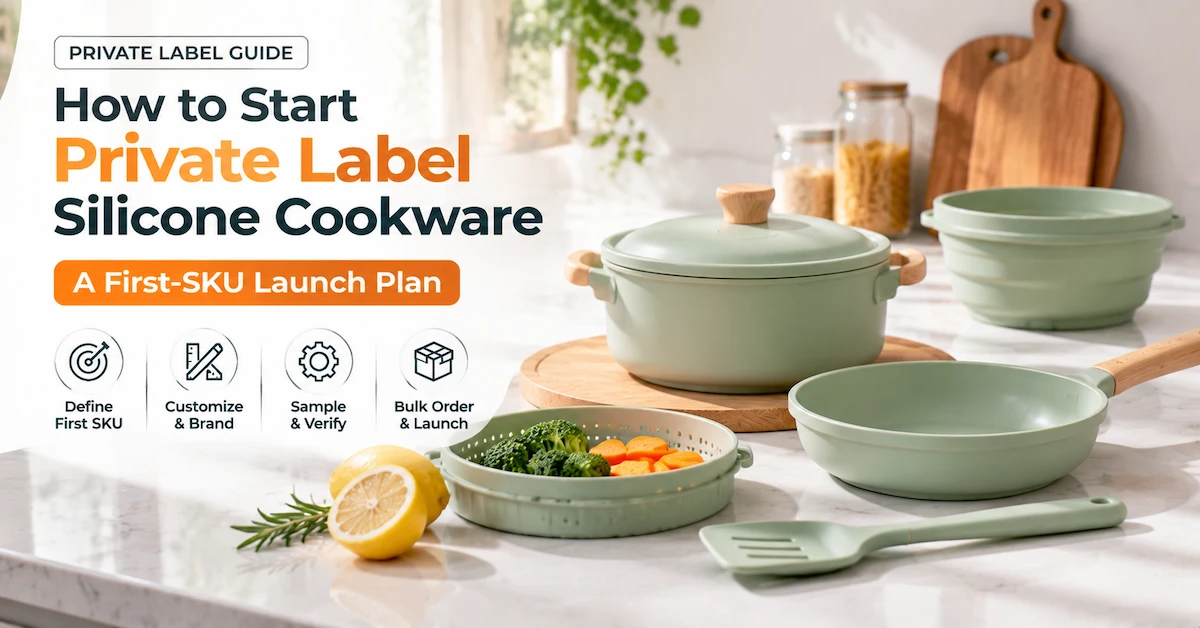
To start private label silicone cookware, choose one clear customer use case, select a launch route, freeze a product brief, verify the material and market evidence, approve the sample and package, and release the first order only when the product record is complete. Leadonex presents WUYI JUCHENG INDUSTRY AND TRADE CO.,LTD as a silicone product OEM/ODM manufacturer with kitchenware and molds, custom development, molding, branding, packaging, and quality-control services. The exact product, documents, MOQ, price, tooling, and schedule still require project-specific confirmation.
How to start private label silicone cookware: the short answer
Start with a product decision, not a logo. Define the customer, cooking or storage task, destination market, first SKU, target channel, product configuration, material evidence, and package before asking a factory for a final quotation. Then choose whether to private-label an existing product, modify an existing platform, or develop a new product with tooling. The first route is usually the simplest way to test a category; the other routes can create more differentiation but require more engineering, sampling, and approval control.
A private-label silicone cookware launch is a chain of decisions: market brief, product architecture, technical specification, material and compliance scope, sample, brand application, packaging, quality release, and replenishment plan. If one link is left vague, the buyer may receive a product that is attractive but difficult to sell, difficult to document, or difficult to reproduce.
For a practical starting point, review Leadonex's Kitchenware & Molds product range, then compare it with the company's custom silicone product service. The goal is not to copy a catalog page. It is to identify a product direction and convert it into a controlled brief for a real project.
What does private-label silicone cookware include?
Private label means that a buyer sells a product under its own brand identity, but the production responsibility can vary widely. In one project, the brand selects a standard silicone kitchen product, adds a logo and custom package, and orders it under a private label. In another, the brand owns a new shape, needs a new mold, chooses the material route, and requires the manufacturer to support design, sampling, testing, and production. Both can be called private label, but they are not the same commercial project.
| Launch route | What changes | Best used when |
|---|---|---|
| Existing product private label | Logo, color, label, set composition, and retail packaging. | The brand wants a controlled market test with limited structural development. |
| Modified product platform | Selected dimensions, compartments, features, accessories, logo, color, or packaging. | An existing product is close to the concept but needs a clearer brand or use-case fit. |
| New private-label development | New structure, mold, material decision, sample, branding system, package, and approval record. | The product must be differentiated by function, shape, or complete customer experience. |
Before you ask how to start private label silicone cookware, decide which of these routes you are actually buying. Many quotation problems begin when a buyer expects a new-product result but sends a standard-product brief, or expects standard-product pricing while requesting new tooling, new packaging, and market-specific evidence.
Step 1: choose the customer problem and the first SKU
A new cookware brand does not need to launch every possible silicone product at once. It needs a first SKU that has a clear job, a clear customer, and a clear reason to exist. The first product may be a foldable food container for compact meal storage, a baking mold with a distinctive form, a kitchen tool for a specific cooking routine, or a coordinated set built around a retail channel. The right choice depends on the brand's customer and route to market, not on the largest catalog.
Write the product decision as one sentence: “We help [specific buyer] solve [specific kitchen task] with [product configuration] sold through [channel].” This sentence becomes a filter for every later choice. If the product is intended for travel, portability and package volume may matter more than a broad assortment. If it is a premium gift set, the unboxing and visual system may be as important as the individual utensil. If it is a baking product, the shape, cavity design, release behavior, and seasonal relevance may drive the range.
| Product direction | Customer task | First decisions to make |
|---|---|---|
| Food containers and lunch boxes | Meal preparation, storage, office lunch, school meals, travel, or compact kitchens. | Capacity, lid, folding or stacking behavior, accessories, package volume, and cleaning instructions. |
| Baking molds | Repeatable shapes for home bakers, gift buyers, seasonal collections, or baking retailers. | Cavity geometry, wall design, demolding, shape language, nesting, and retail protection. |
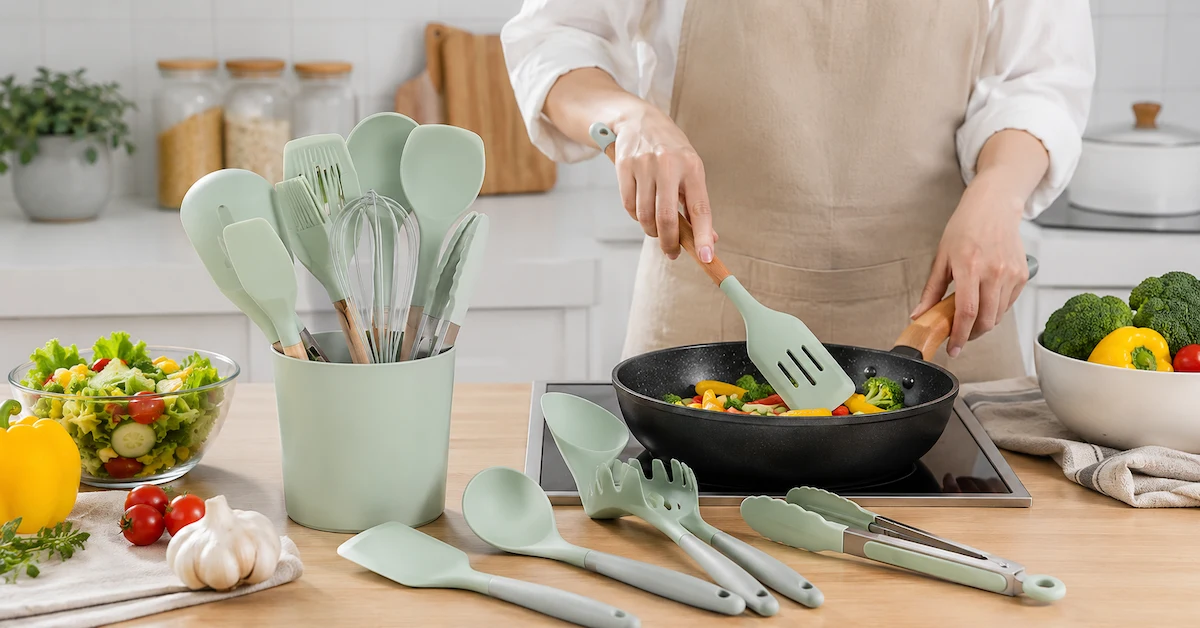
| Cooking tools and accessories | Daily cooking, mixing, serving, baking, or non-stick cookware support. | Grip, handle, edge, food-contact surface, tool set logic, and brand differentiation. |
| Coordinated cookware collection | A consistent kitchen system rather than one isolated product. | Shared colors, logo rules, package hierarchy, SKU roles, and replenishment plan. |
Leadonex's public Kitchenware & Molds range includes silicone food containers, foldable lunch-box directions, and mold products. These public product directions can help a new brand choose an initial category, but the buyer must still define the exact use, construction, material, package, market, and documents for the selected SKU.
Step 2: decide whether to use a catalog item, modify it, or develop a new mold
The fastest way to waste time is to treat product development as an all-or-nothing decision. A brand can start with an existing product, test its market positioning, and reserve deeper structural work for the next release. It can also develop a new product when the brand promise depends on a shape, function, or combination that is not available in the existing range. The commercial question is not “custom or standard?” It is “which level of change is necessary to make the product credible to the target buyer?”
Use an existing product when
- The main differentiation is brand presentation, color, logo, bundle, or retail packaging.
- The product already fits the intended customer task and does not require structural changes.
- The brand needs a controlled first test before investing in new tooling.
Modify an existing platform when
- The overall product role is correct, but dimensions, compartments, handles, lids, or accessories need adjustment.
- The brand has a clear improvement that can be discussed through a drawing or reference sample.
- The project needs a stronger fit with the package, channel, or customer routine.
Develop a new mold when
- The shape or function is central to the brand's reason to buy.
- The product must integrate features that cannot be achieved through a color or logo change.
- The brand has enough product clarity to freeze dimensions, components, use conditions, and approval criteria.
Leadonex's public customization material describes new molds, 3D modeling, structural optimization, feasibility analysis, CNC precision machining, mold life testing, multi-cavity mold design, and mold maintenance. These capabilities are relevant when the chosen launch route requires development. Ask the engineering team to state which changes need a new tool, which can use an existing tool, and what the sample will prove before you approve tooling.
Step 3: build a private-label product brief
A private-label launch becomes manageable when the brand turns ideas into a product brief that another team can inspect. The brief does not need to know every engineering answer on day one. It must clearly separate fixed requirements, preferred options, open questions, and evidence that the manufacturer must provide. This prevents a product image or informal message from becoming the only specification.
| Brief section | Include | Decision status |
|---|---|---|
| Customer and application | Target user, cooking or storage task, environment, channel, and destination market. | Fixed before feasibility review. |
| Product construction | Body, lid, seal, insert, handle, closure, accessory, assembly, and food-contact parts. | Confirm with engineering before sample approval. |
| Dimensions and function | Size, capacity, wall areas, critical interfaces, fit, folding, stability, and use checks. | Freeze in the released drawing. |
| Material and market evidence | Material form, grade, food-contact parts, target standard, test needs, and label claims. | Confirm for the final product and market. |
| Brand system | Logo artwork, Pantone or physical color, placement, texture, pattern, and set rules. | Approve visually and in the artwork file. |
| Packaging and quantity | Retail package, labels, carton, accessories, SKU quantity, sample quantity, and reorder intent. | Quote and approve with the product. |
Send the brief with a drawing, 3D file, reference sample, or clear photographs. If a requirement is not known, mark it “open for recommendation” instead of leaving it blank. A good manufacturer can then return a feasibility response that explains the proposed material, molding route, tooling, sample, and unresolved questions.
Step 4: define material, food contact, and performance claims
A private-label cookware brand must be able to explain what the product is made of, which parts contact food, where it will be sold, and what use instructions are supported. “Food-grade silicone” is an important starting phrase, but it does not by itself define the whole product. A lid, valve, insert, printed mark, adhesive, or non-silicone component may require separate review.
Leadonex's public OEM/ODM page lists ordinary silicone rubber, food-grade silicone rubber, and medical silicone rubber, and distinguishes HTV solid silicone from LSR liquid silicone rubber. It refers to FDA, LFGB, and DGCCRF in the food-grade material discussion. The customization page also lists FDA, LFGB, and RoHS-related material wording and states that REACH, PAHs, and phthalates are tested by SGS. These are official website statements, not a universal certificate package for every SKU.
| Claim area | Brand should define | Evidence to request |
|---|---|---|
| Food contact | Every part that touches food and the intended food or storage use. | Current report or declaration matched to the final construction. |
| Market standard | Destination market, applicable standard, required claim, and label language. | Document scope, issue date, sample identity, and applicability. |
| Performance | Cleaning, storage, flexibility, sealing, folding, heat-related use, or other customer-facing instructions. | Product-specific use validation and written limits. |
| Color and additives | Color reference, components, coatings, prints, and any non-silicone materials. | Traceability from approved color and material to production. |
The public website does not establish one universal material hardness, certificate number, certificate expiry, test scope, or temperature range for every private-label cookware product. The customization page publishes a general -40 C to +230 C silicone product statement, but a brand should not transfer that range to every SKU without product-specific confirmation. The label claim should be narrower than the evidence, not broader.
Step 5: choose the molding route with the product, not the keyword
A private-label brand does not need to choose a process because it sounds advanced. The molding route should fit the geometry, material, wall behavior, detail, color plan, component integration, quantity, and inspection requirements. Leadonex publicly lists solid silicone compression molding, liquid silicone rubber molding, precision co-injection drip molding, silicone fabric coating and curing, and other custom manufacturing services. The exact recommendation belongs to the engineering review of the product.
Solid silicone compression molding
Compression molding may suit a range of flexible kitchen products and molded parts where the tool, material charge, cavity, curing, demolding, flash, and trimming can be controlled. The buyer should ask how the parting line, wall areas, thin and thick sections, logo, and trimming will affect the approved appearance and function. The process name alone does not prove a particular tolerance, cost, or finished-part performance.
Liquid silicone rubber molding
LSR molding may be considered for selected detailed or integrated silicone components when the material, tool, dosing, mixing, venting, curing, and inspection plan are suitable. Ask the manufacturer to explain why LSR is proposed, what the tool will control, which features are critical, and what sample evidence is needed. Do not assume that LSR automatically means a lower unit cost or better food-contact result.
A process decision checklist
- What geometry, wall sections, undercuts, vents, inserts, or demolding risks affect the product?
- Which material form and grade match the use and market evidence?
- How will color, logo, texture, flash, parting line, and surface marks be controlled?
- Which dimensions and functions must be measured on the sample and production parts?
- What happens if the selected process cannot meet a fixed requirement?
Leadonex's public material also refers to CNC precision machining, multi-cavity mold design, mold life testing, and mold maintenance. A new brand should ask the supplier to connect those capabilities to its own part drawing instead of accepting a generic capability list.
Step 6: create a brand system that the factory can reproduce
Private label is not just putting a logo on a product. The brand system must be reproducible across the first SKU, the next color, a second product, and a repeat shipment. Define the logo method, position, size, color references, texture, pattern, accessory rules, package hierarchy, and the visual difference between product families. A factory should receive controlled artwork and a sample reference rather than only a screenshot from a design tool.
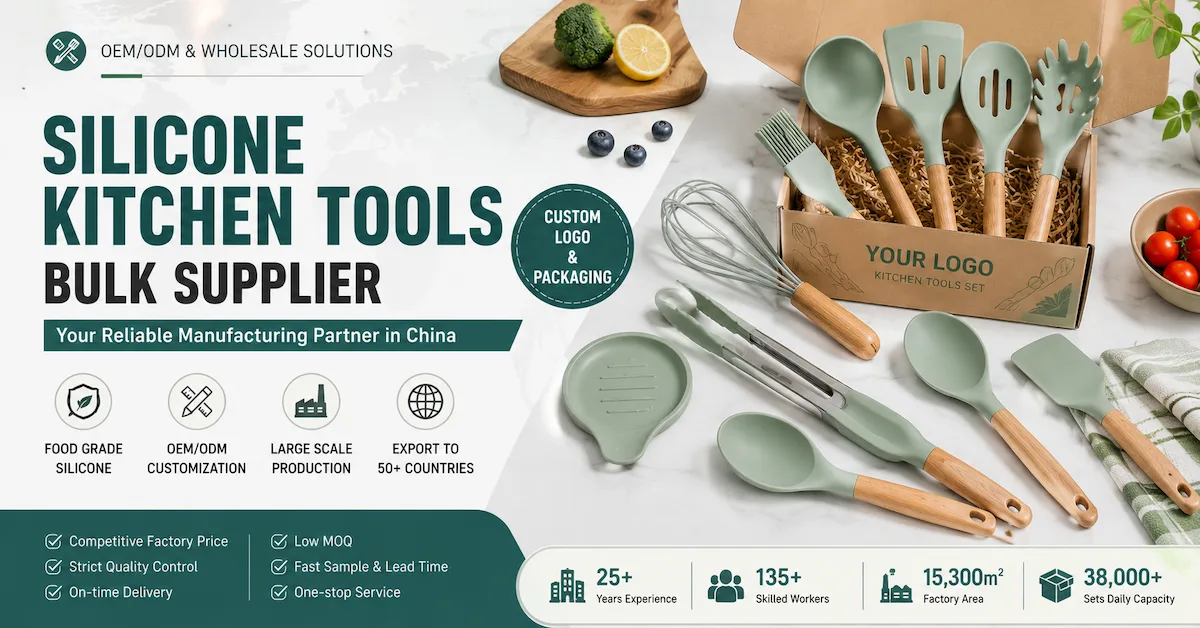
Leadonex's public customization page describes Pantone-based color customization, translucent, white, tea green, Morandi green, and red as commonly used colors, plus dual-color and marble options. It also describes embossed logos, printing, labels, packaging, assembly, and inspection. These options are useful starting points for a brand system, but the selected method, surface, color tolerance, artwork, and inspection standard must be approved for each product.
| Brand element | Release file or reference | Approval question |
|---|---|---|
| Logo | Vector artwork, size, location, method, and surface reference. | Is it visible, durable, centered, and consistent with the sample? |
| Color | Pantone or physical reference, color name, tolerance, and batch approval method. | What range will be accepted in production? |
| Set logic | SKU roles, color combinations, accessory rules, and cross-product consistency. | Can the range expand without losing its visual system? |
| Packaging | Artwork, label language, barcode fields, package dimensions, carton, and inserts. | Does the package protect, explain, and present the product? |
Brand consistency is a production requirement because color, logo, package, and accessory errors are visible to the end customer. Treat them with the same release discipline as a critical dimension.
Step 7: approve a sample as a launch gate
The first sample should decide whether the private-label product is ready to move forward, not merely whether the product looks attractive. A sample approval should compare the actual part with the brief, drawing, material, color, logo, function, and package. If the sample is approved without a written record, later production teams may not know which details were critical.
Leadonex's public OEM/ODM workflow lists Requirement Analysis, Design & Development, Sample Making, Mass Production, Quality Inspection, and Delivery Service. The customization page also describes prototypes, mold and tooling, molding, curing, demolding, initial QC, post-processing, cleaning, packaging, and final QC. For a brand, the important result is a signed or otherwise controlled decision at each gate.
| Sample gate | Check | Release record |
|---|---|---|
| Identity | SKU, revision, material, color, tooling, and sample date. | Sample approval sheet with revision reference. |
| Appearance | Shape, surface, flash, parting line, bubbles, marks, logo, texture, and color. | Golden sample and defect limits. |
| Dimensions | Overall size, capacity, wall areas, interfaces, and critical measurements. | Released drawing and measurement method. |
| Function | Lid fit, folding, stability, release, grip, assembly, cleaning, or other intended use. | Test method, pass/fail result, and open actions. |
| Package | Retail pack, labels, inserts, accessories, carton, and protection. | Approved package sample and artwork revision. |
The customization page states 7-15 days rapid sampling. Treat that as a website service statement, not a universal promise for every private-label project. Confirm what starts the count, whether the tool already exists, how many revisions are included, and whether material, color, logo, and package approval are included.
Step 8: build the first-order cost and quotation request
A new brand needs a cost model before it commits to a product route. The objective is not to guess the final selling price from a factory unit price. The objective is to separate one-time development costs, per-unit production costs, branding and package costs, inspection or evidence requirements, and the commercial assumptions that can change with quantity or configuration.
| Cost group | Possible inputs | Ask the manufacturer to separate |
|---|---|---|
| Development | Engineering review, prototype, drawing changes, and sample work. | One-time development charges and included revisions. |
| Tooling | New mold, modification, cavities, maintenance, and tooling-related inspection. | Tooling cost, terms, ownership, maintenance, and change assumptions. |
| Production | Material, product weight, process, labor, trimming, assembly, and quantity. | Unit price basis and quantity assumptions. |
| Branding and packaging | Color, logo, printing, labels, package, inserts, cartons, and assembly. | Per-unit and one-time package or artwork charges. |
| Evidence and inspection | Material reports, testing, third-party inspection, sample retention, and records. | Included checks, optional tests, report costs, and responsibilities. |
Leadonex's public website does not publish a universal MOQ, price, tooling fee, sample fee, payment term, or mass-production lead time for all silicone cookware. Request these items for the exact product, quantity, colors, package, tooling status, destination market, and schedule. A quotation that omits assumptions is not yet a comparable quotation.
A useful quotation request should ask the factory to identify what is confirmed, what is recommended, and what is still open. That response gives a new brand a better basis for deciding whether to start with an existing product, modify a platform, or invest in a new mold.
Step 9: release the first order with a quality pack
Before mass production, assemble a quality pack that the sales, purchasing, factory, and inspection teams can all use. The pack should make the approved product obvious and make changes visible. It should include the released drawing, golden sample, material and color references, logo artwork, component list, package files, inspection criteria, market documents, and open-action closure.
Leadonex publicly lists raw-material testing, dimensional accuracy measurement, physical-property testing, environmental aging testing, and full-process quality inspection. These are useful categories for a buyer's quality pack. The brand still needs to define which checks apply to its product, how the result is recorded, what the acceptance limit is, and which report belongs to the released configuration.
| Quality-pack item | Purpose | Release owner |
|---|---|---|
| Product specification | Defines dimensions, materials, components, function, and critical features. | Brand product or engineering owner. |
| Golden sample | Provides the visual and physical reference for production approval. | Brand and manufacturer jointly. |
| Material and test evidence | Supports the intended market claim and use instructions. | Manufacturer supplies; brand verifies scope. |
| Brand and package files | Prevents logo, color, label, and package drift. | Brand design and purchasing owners. |
| Inspection and release plan | Defines checks, limits, sampling, nonconformity action, and shipment release. | Brand quality owner with factory QC. |
Do not release a first order while critical requirements are still hidden in chat messages. If a requirement cannot be confirmed yet, list it as an open action with an owner and a decision date. A clear “not approved” is safer than an accidental approval.
Step 10: plan the second order before the first shipment
A private label becomes a business when the product can be reordered without losing its identity or function. Before the first shipment, decide what information will be reused, what may change, and what requires a new sample or evidence review. A product that is easy to reorder is more valuable than a product that can only be made once.
Keep the approved sample, revision-controlled drawing, material and color references, logo artwork, component list, packaging files, inspection standard, reports, and order history together. Require each purchase order to reference the released revision. If the brand changes material, color, tool, accessory, label, package, destination market, or quantity, decide whether the change affects performance, compliance, price, or approval.
Reorder questions
- Can the factory identify the approved mold, material, color, and package revision?
- Which changes require a new sample or updated test evidence?
- How will production and inspection records be linked to the purchase order?
- What happens if a material, component, or packaging input changes?
- Which product improvements belong in the next version rather than the current reorder?
Leadonex's public OEM/ODM workflow includes quality inspection and delivery service after mass production. A new brand should use that workflow as a reason to establish a clear revision and release process, not as a substitute for its own product records.
A private-label launch checklist for brand owners
Use this checklist before approving the first commercial order. It is a buyer-side operating tool, not a claim about a universal factory process.
| Gate | Pass condition | If not complete |
|---|---|---|
| Market gate | One customer, use case, channel, and first SKU are defined. | Do not start tooling; clarify the offer. |
| Product gate | Construction, dimensions, function, material, and food-contact parts are recorded. | Return to feasibility and specification review. |
| Brand gate | Logo, color, package, labels, and set rules are approved. | Do not release artwork or package production. |
| Evidence gate | Required documents and tests match the final product, market, and claim. | Narrow the claim or request additional evidence. |
| Sample gate | Sample, drawing, function, appearance, and package are approved together. | Record correction and resample. |
| Commercial gate | MOQ, price, tooling, schedule, payment, package, and logistics assumptions are written. | Do not approve the purchase order. |
| Reorder gate | The released revision and change-control method are ready for the next order. | Create the production reference before launch. |
What Leadonex can contribute to a private-label cookware launch
Leadonex's public pages identify WUYI JUCHENG INDUSTRY AND TRADE CO.,LTD as the company behind the brand and present food-grade silicone product OEM/ODM manufacturing. The published service scope includes product design and development, material recommendations, silicone rubber compression molding, LSR molding, precision co-injection drip molding, CNC mold work, mold maintenance, printing, assembly, precision cutting, packaging design, raw-material testing, dimensional measurement, physical-property testing, and environmental aging testing.
The public OEM/ODM page presents a six-stage flow: Requirement Analysis, Design & Development, Sample Making, Mass Production, Quality Inspection, and Delivery Service. The customization page states up to 38,000 sets of daily production capacity, a 15,300 square meter factory area, and 135 employees. These are official website statements with no public calculation method or allocation by SKU. A brand should use them as part of due diligence and ask for project-specific capacity, schedule, evidence, and commercial terms.
The right first conversation is therefore not “send your price list.” It is “here is our first SKU brief; please recommend the route, material, tooling, sample, evidence, package, and quotation assumptions.” That format gives Leadonex's engineering and sales teams information they can respond to and gives the brand a record it can compare with other options.
Frequently asked questions
How much money do I need to start private-label silicone cookware?
There is no reliable universal number because the launch route changes the cost structure. An existing product with a logo and package has different one-time costs from a modified product or new mold. Material, product weight, color, branding, package, quantity, testing, and destination market also affect the quotation. Leadonex's public website does not publish a universal price, MOQ, tooling fee, or sample fee, so request a project-specific quotation.
How should I start private-label silicone cookware: one SKU or a full set?
Start with the smallest product system that can prove the customer promise. One hero SKU can make the market message, package, customer feedback, and repeat-order process easier to control. A set may make sense when the customer task depends on several coordinated items, but it increases decisions around color, components, packaging, and inspection.
Can I private-label an existing Leadonex kitchenware product?
The public website presents kitchenware and mold products and describes customization of material, structure, size, shape, color, logo, pattern, packaging, and labels. Confirm whether the selected product supports the requested change, whether new tooling is needed, and which sample, evidence, and commercial terms apply.
Do I need a new mold for private-label silicone cookware?
Not always. A logo, color, label, package, or set change may be possible without a new structural mold. A change to dimensions, compartments, handles, lids, geometry, or integrated features may require tooling or a feasibility review. Ask the manufacturer to classify your change before approving development.
Which silicone material should a new cookware brand choose?
Choose based on food-contact parts, destination market, use conditions, geometry, physical requirements, and the evidence needed for the final claim. Leadonex's OEM/ODM page discusses food-grade silicone, HTV solid silicone, and LSR liquid silicone rubber, but the exact material and evidence scope must be confirmed for the final product.
Can I use a custom Pantone color?
Leadonex's public customization page describes Pantone-based color customization and options including dual-color and marble silicone. The brand should provide the color reference, define an acceptable visual range, and approve a physical sample before production. Digital artwork alone is not a sufficient production color standard.
What documents should I request before selling the product?
Request documents and tests that match the final product, components, color, market, production revision, and intended claim. The Leadonex website lists or references FDA, LFGB, DGCCRF, RoHS-related wording, REACH, PAHs, and phthalates testing, but it does not publish one universal certificate number, expiry, or scope for every SKU.
What should I send to get a useful private-label quotation?
Send the customer use case, product reference or drawing, dimensions, capacity, components, food-contact parts, market, material preference, color, logo, package, quantity by variant, sample need, required evidence, and target schedule. Mark open decisions clearly so the manufacturer can recommend a route instead of pricing unknown assumptions.
Does Leadonex publish a standard MOQ or mass-production lead time?
The public pages reviewed for this guide do not publish one universal MOQ or mass-production lead time for all silicone cookware. The customization page states 7-15 days rapid sampling, but that must be confirmed for the product, tooling, color, revisions, and approval conditions.
How should I protect the second order?
Keep the golden sample, released specification, material and color references, logo artwork, package files, inspection criteria, reports, and change history. Require every reorder to reference the same revision and request approval before any material, tool, color, accessory, label, package, or market change.
Conclusion
To start private label silicone cookware, begin with one clear customer problem and one manageable product decision. Choose an existing item, a modified platform, or a new mold deliberately. Build a product brief, define the material and food-contact evidence, select the molding route with engineering, release the brand system and package, approve a sample against written criteria, and separate all commercial assumptions before the first order.
Leadonex's public website presents WUYI JUCHENG INDUSTRY AND TRADE CO.,LTD as a silicone product OEM/ODM manufacturer with Kitchenware & Molds products, custom development, molding, material guidance, tooling, branding, packaging, quality inspection, and delivery workflow. The exact product, documents, MOQ, price, tooling terms, schedule, and market scope still need to be confirmed in a project-specific quotation.
The strongest next step is to send a first-SKU brief rather than a generic request for a catalog. Include the application, product reference, material and market requirements, quantity, color, logo, package, evidence, and target schedule so the factory can respond with a feasible launch route.