
What Should a Silicone Kitchen Tools Export Supplier Provide?
A good silicone kitchen tools export supplier should be able to do three things well: make the product consistently, adapt it to the buyer's requirements, and handle the practical details of supplying an overseas market.
That sounds straightforward, but these capabilities are not always found in the same supplier.
For an importer or kitchenware brand, the real evaluation usually starts with questions such as:
- Can the supplier manufacture the product directly?
- Can the design, size, color, or logo be customized?
- What silicone material is available?
- How is production quality checked?
- Can the supplier handle repeat orders?
- Can the supplier prepare export-ready packaging?
- Does the factory have experience serving overseas customers?
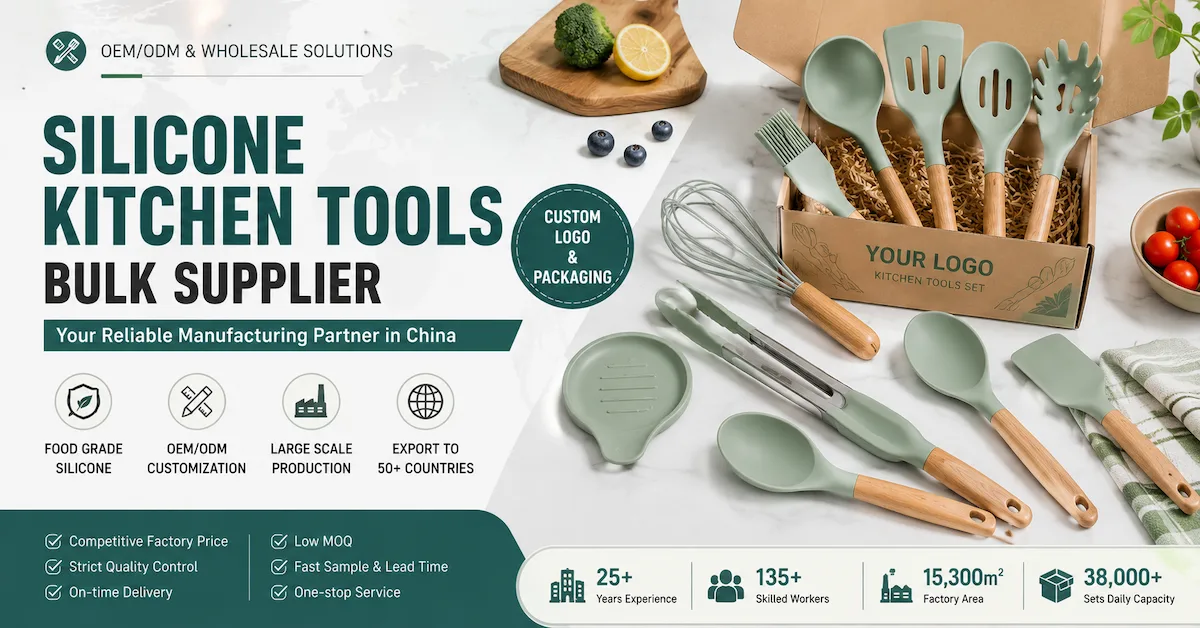
Leadonex positions itself as a food-grade silicone product manufacturer and OEM/ODM partner. Its current manufacturing information lists more than 25 years of silicone manufacturing experience, a 15,300-square-meter factory, 135 employees, and daily production capacity of up to 38,000 sets.
For buyers who need a supplier rather than a one-time product source, those details matter because kitchenware programs often involve multiple SKUs, repeat production, packaging changes, and ongoing product development.
Who Should Work With a Silicone Kitchen Tools Export Supplier?
The right supplier depends on how you plan to sell the products.
Kitchenware Brands
Established kitchenware brands often need products that fit an existing visual identity.
Typical requirements include:
- Brand-specific colors
- Custom product shapes
- Logo application
- Retail packaging
- Coordinated product sets
A manufacturer with in-house customization capabilities can make these changes part of the development process rather than treating them as separate purchasing tasks.
Importers and Distributors
Importers normally care about consistency and supply continuity.
They may need:
- Several product SKUs
- Stable repeat production
- Export packaging
- Batch consistency
- Flexible order planning
The supplier's ability to manage repeat orders can be more important than the lowest initial quotation.
Wholesale Buyers
Wholesale customers tend to prioritize products that can be sold across different retail channels.
A practical product range may include:
| Product | Typical Market | Buyer Consideration |
|---|---|---|
| Silicone spatula | Cooking | Flexibility and heat resistance |
| Silicone turner | Cooking | Edge design and strength |
| Silicone tongs | Food handling | Grip and structure |
| Silicone brush | Baking / grilling | Bristle design and cleaning |
| Silicone whisk | Mixing | Wire structure and handle |
| Silicone utensil set | Retail | Product combination and packaging |
Private Label Sellers
Private label buyers usually need more than a standard catalog product.
They may require:
- Custom colors
- Brand logos
- Product combinations
- Customized labels
- Retail-ready packaging
Leadonex's OEM/ODM service covers product design, prototyping, molding, printing, packaging, and customization of material, structure, function, shape, size, color, logo, pattern, and labels.
What Silicone Kitchen Tools Can You Source?
The exact product range should be confirmed against the supplier's current catalog and project capabilities. For a broader silicone kitchenware program, buyers may source several related product types rather than treating one utensil as a standalone item.
Common categories include:
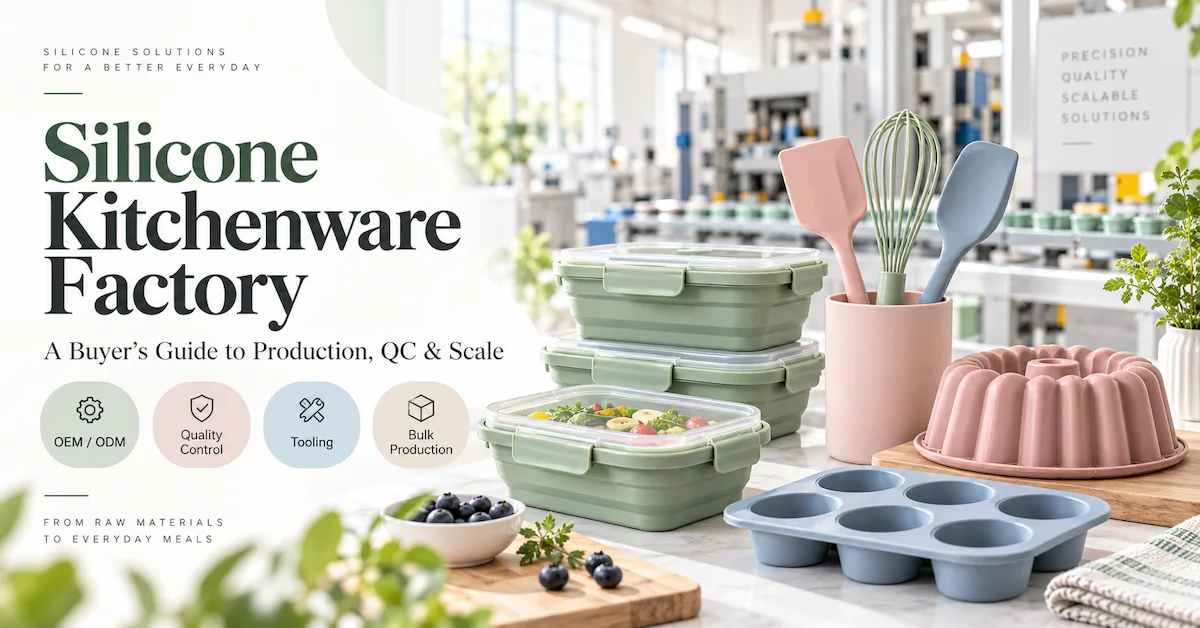
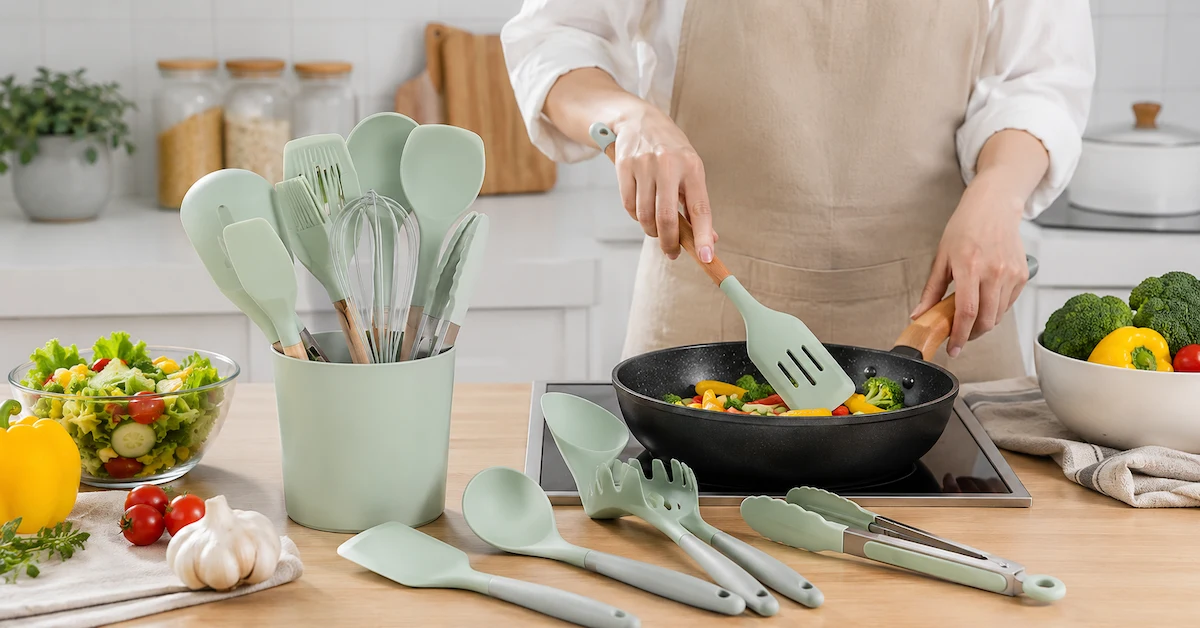
- Silicone spatulas
- Silicone turners
- Silicone tongs
- Silicone brushes
- Silicone whisks
- Silicone utensil sets
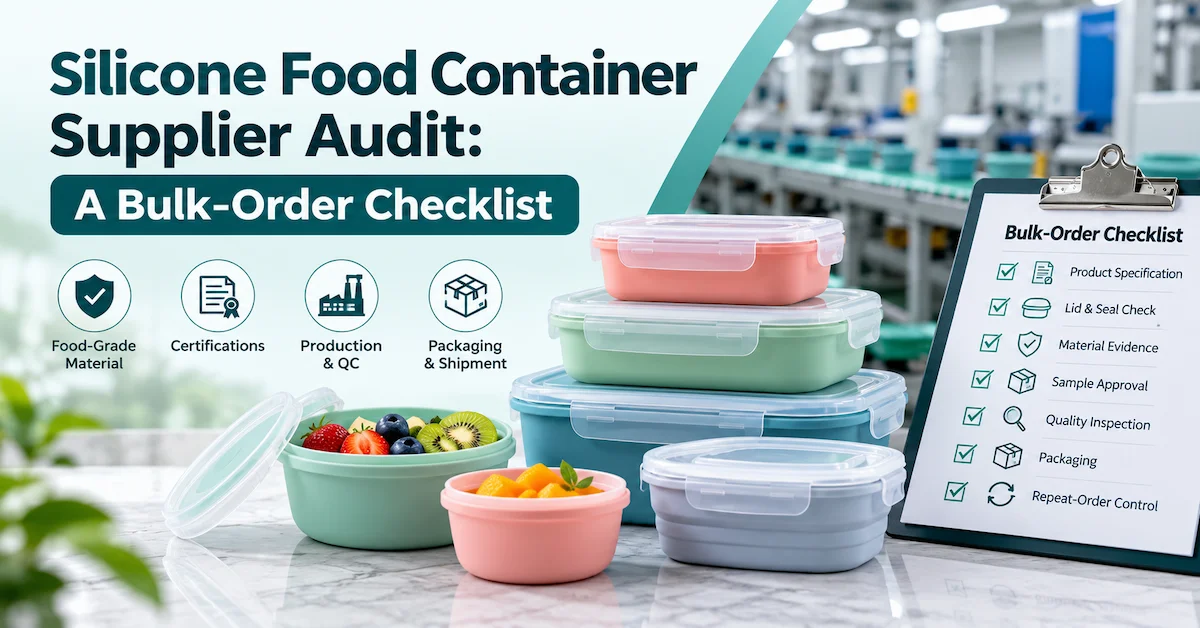
- Silicone food containers
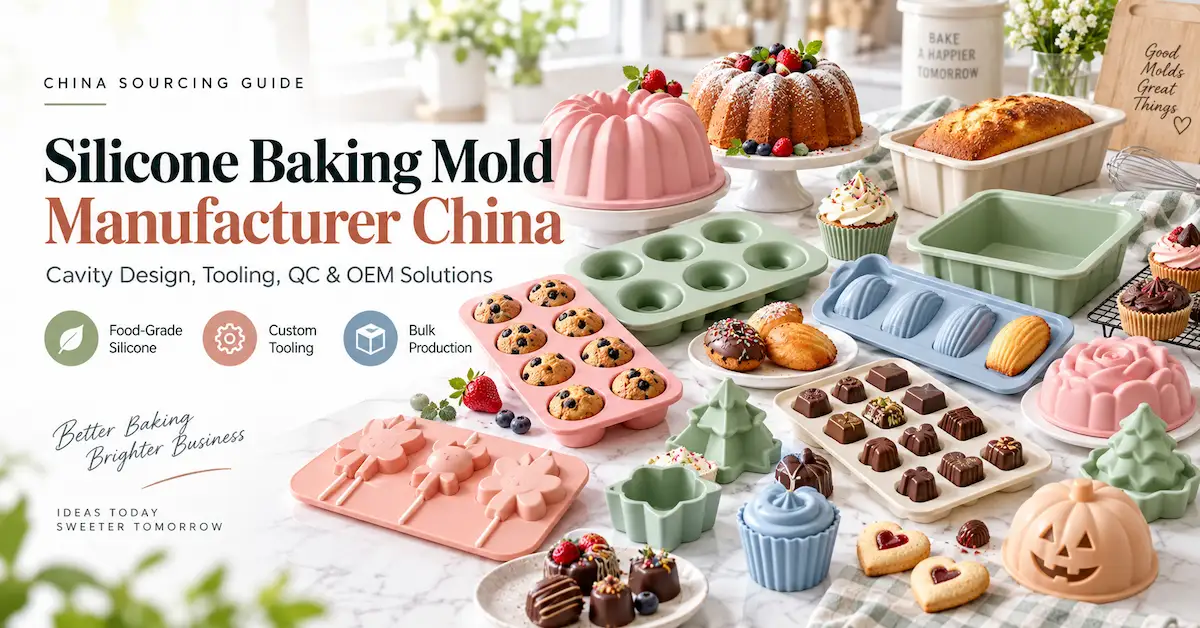
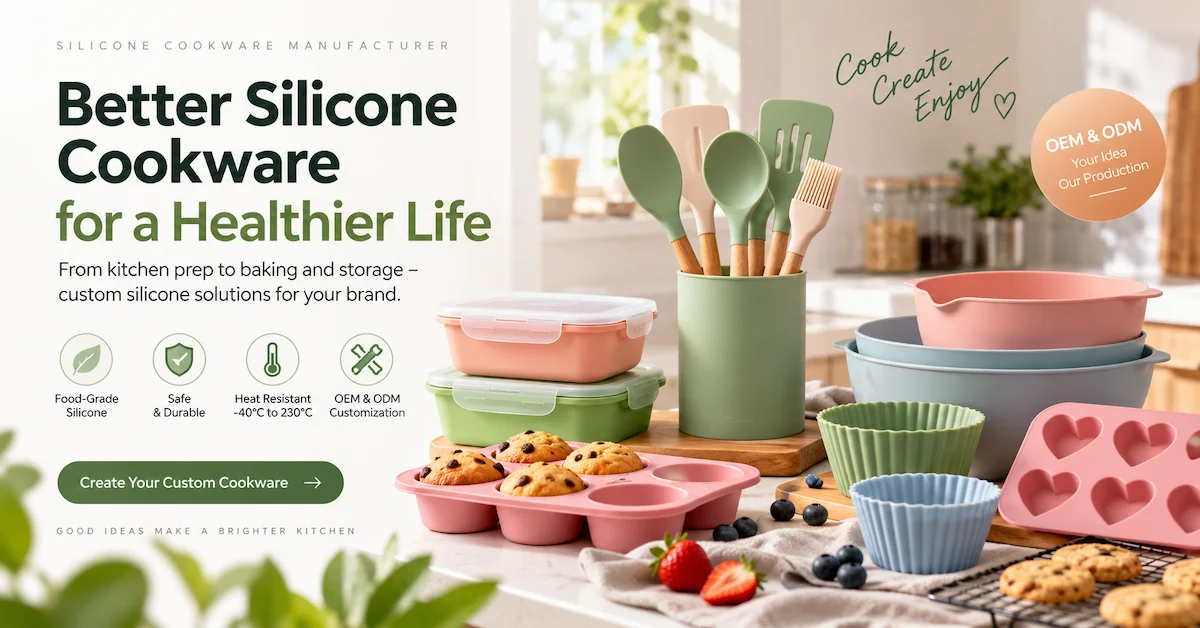
- Silicone baking products
Leadonex currently groups its kitchen-related products under Kitchenware & molds, with its public product category including silicone food containers as well as several silicone mold categories.
This is useful for buyers considering a wider silicone kitchenware collection, especially when the project includes more than one product family.
What Materials Should Buyers Discuss With a Silicone Kitchen Tools Export Supplier?
Material selection should be discussed before the product enters mass production.
For food-contact kitchenware, buyers should identify the intended application and target market first. The appropriate material and testing requirements depend on those conditions.
Leadonex states that its silicone material options include food-grade silicone, medical silicone, ordinary silicone rubber, HTV solid silicone, and LSR liquid silicone rubber. It also lists FDA and LFGB food-grade options and says engineers recommend materials according to product requirements such as tensile strength, tear strength, and applicable standards.
A buyer's material brief should therefore include:
- Product application
- Expected temperature conditions
- Required flexibility
- Product thickness
- Target sales market
- Food-contact requirements
- Required documentation or testing
This approach is more useful than simply requesting “high-quality silicone.”
Key Silicone Properties for Kitchen Tools
Different kitchen tools place different demands on the material.
Temperature Resistance
Cooking tools may be exposed to elevated temperatures, so buyers should define the intended operating conditions rather than relying on a generic temperature claim.
Leadonex states that its silicone products can operate within a range of -40°C to +230°C, while noting that product performance depends on the material and application.
Flexibility and Recovery
Spatulas, turners, brushes, and similar tools often require controlled flexibility.
The material needs to bend where the product design requires it while maintaining its intended shape during use.
Chemical Stability
Silicone can offer good chemical stability, which is useful for reusable kitchen products exposed to different foods and cleaning conditions.
However, buyers should evaluate the finished product rather than judging performance from the raw material alone.
How Does a Silicone Kitchen Tools Export Supplier Handle OEM Projects?
For an OEM project, the product itself is only one part of the job. The development process matters just as much.
Leadonex describes a six-stage OEM/ODM workflow:
- Requirement analysis
- Design and development
- Sample making
- Mass production
- Quality inspection
- Delivery service
This gives buyers a practical framework for managing a custom kitchen tool project.
Requirement Analysis
The buyer and manufacturer should establish:
- Product function
- Dimensions
- Material
- Target market
- Expected quantity
- Branding requirements
- Packaging requirements
Design and Development
The manufacturer evaluates the product structure and prepares a production solution.
For a new product, this stage can prevent expensive mold changes later.
Sample Making
A sample gives the buyer an opportunity to check:
- Size
- Shape
- Grip
- Flexibility
- Appearance
- Logo placement
The approved sample should become the reference point for mass production.
Mass Production
Once the sample is approved, production can move into the planned manufacturing process.
For larger programs, buyers should also confirm how the supplier controls consistency between production batches.
What Customization Can You Request?
Customization is one of the strongest reasons to work directly with an OEM manufacturer.
Product Size and Shape
A manufacturer can modify the product according to:
- Dimensions
- Structure
- Shape
- Function
Leadonex states that new molds can be developed to customize product function, size, structure, shape, and embossed logos.
Custom Colors
Color can be important when kitchen tools are part of a larger brand collection.
Leadonex supports Pantone-based color customization and also lists options such as dual-color and marble silicone products.
Logo and Branding
Depending on the product and design, buyers can discuss:
- Molded logos
- Embossed logos
- Printing
- Pattern application
The branding method should be selected together with the product design so that appearance, durability, and production cost remain balanced.
Packaging and Labels
Private label projects often require the finished product to arrive ready for retail distribution.
Leadonex states that its customized packaging service covers design, development, assembly, and inspection.
How Is Quality Controlled Before Export?
Quality control should start with the material and continue through final inspection.
Leadonex states that it has a professional quality management and inspection team and controls raw materials and finished products according to export inspection standards.Its current manufacturing information lists 120 testing instruments and production equipment, including robotic rubber mixers, automatic sandblasting machines, fully automatic flat vulcanizing machines, and fully automatic air compressors.
A practical B2B quality process should cover at least four stages.
Raw Material Inspection
Check:
- Material specification
- Batch information
- Color consistency
- Required documentation
First-Article or Sample Inspection
Compare the production sample with the approved specification before the order proceeds at full scale.
In-Process Inspection
Monitor:
- Dimensions
- Surface condition
- Color
- Shape
- Assembly
- Logo application
Final Inspection
Before shipment, confirm:
- Product quantity
- Appearance
- Packaging
- Labels
- Customer specifications
For export orders, the objective is not simply to find defective pieces. It is to prevent an inconsistent batch from reaching the buyer's warehouse.
What Certifications and Testing Should Buyers Ask About?
There is no single certificate that automatically proves a silicone kitchen product is suitable for every market.
The correct documentation depends on:
- Product type
- Intended use
- Destination market
- Food-contact requirements
- Customer specifications
Leadonex's customization page states that its factory has passed SA8000, ISO 9001, ISO 14001, BSCI, SEDEX, BRC, FCCA, NBCU, and Disney certifications. It also states that materials are certified to FDA and LFGB requirements and that REACH, PAHs, and phthalates are tested by SGS.
For a purchase order, buyers should ask for the documents applicable to the specific product and market rather than assuming that every certificate applies to every SKU.
Can the Supplier Handle Large Export Orders?
Capacity becomes important when a product moves from market testing into regular distribution.
Leadonex currently states:
- 15,300 m² factory area
- 135 employees
- Up to 38,000 sets daily production capacity
- Nearly 100 million annual output value
- More than 10,500 customized silicone projects
- 50+ countries served
- 1,000+ customers
These figures do not replace an order-specific capacity review. Buyers should still provide SKU quantities and required delivery dates so the factory can confirm production availability.
For a growing brand, this conversation should happen before the first large purchase order.
What About Export and Delivery Support?
An export supplier should be able to explain how finished products move from the factory to the buyer's destination.
Leadonex currently lists typical shipping times of:
| Shipping Method | Listed Transit Time |
|---|---|
| DHL / UPS / FedEx | 3–8 days |
| Air freight | 10–15 days |
| Sea freight | 30–50 days |
These are typical shipping times stated on its customization page, not guaranteed delivery dates for every destination. Actual timing can vary according to destination, customs, shipping conditions, and order preparation.
For a commercial order, buyers should confirm the complete delivery plan together with the production schedule.
Silicone Kitchen Tools Export Supplier vs Trading Company
A trading company and a factory can both be useful, but they solve different purchasing problems.
| Factor | Direct Factory | Trading Company |
|---|---|---|
| Production communication | Direct | Usually through sales team |
| Product customization | Often more flexible | Depends on factory network |
| Mold development | Direct factory control | May be outsourced |
| Production visibility | Higher | Depends on supplier |
| Product range | Factory capability | Potentially broader |
| OEM development | Suitable for long-term projects | Depends on partners |
| Repeat production | Direct planning | Depends on source factories |
If the project involves a unique design, mold investment, multiple revisions, or long-term repeat orders, direct communication with the manufacturing side can be especially valuable.
How Much Does Custom Silicone Kitchenware Cost?
There is no useful universal price for a custom silicone kitchen tool.
The final quotation can depend on:
- Product dimensions
- Silicone material
- Product weight
- Mold structure
- Production quantity
- Number of colors
- Logo method
- Packaging
- Testing requirements
- Shipping method
For this reason, a good RFQ should provide enough information for the supplier to calculate the actual production requirements.
A buyer who sends only a product photo may receive a rough estimate. A buyer who sends dimensions, quantity, target market, color, branding, and packaging requirements is more likely to receive a useful quotation.
What Should You Include in an RFQ?
For a faster and more accurate quotation, prepare:
Product
- Product name
- Reference image or drawing
- Dimensions
- Weight target
- Function
Material
- Silicone type
- Food-contact requirement
- Hardness requirement,if known
Customization
- Color
- Logo
- Pattern
- Packaging
Commercial
- Estimated quantity
- Target market
- Required delivery date
- Testing requirements
A useful RFQ might look like this:
We are sourcing a custom silicone kitchen utensil set for the US market. The set includes a spatula, turner, tongs, and brush. We require a custom color, molded logo, retail packaging, and an initial order of 10,000 sets. Please quote tooling, unit cost, sample lead time, production lead time, packaging, and available compliance documentation.
That gives the supplier enough information to respond commercially rather than sending a generic catalog.
How to Choose the Right Silicone Kitchen Tools Export Supplier
Before placing an order, use a short supplier checklist.
| Evaluation Area | What to Verify |
|---|---|
| Manufacturing | Direct production capability |
| Materials | Silicone specification and documentation |
| OEM | Mold and product development support |
| Quality | Raw material and finished-product inspection |
| Compliance | Market-specific testing and documents |
| Capacity | Ability to handle current and repeat orders |
| Packaging | Private label and retail packaging |
| Export | Experience with international shipments |
| Communication | Clear technical and commercial response |
| After-sales | Process for handling quality issues |
The supplier that gives the clearest answers is not necessarily the cheapest. It is often the one that makes the project easier to manage after the purchase order is signed.
Why Consider Leadonex for Silicone Kitchenware OEM?
Leadonex's silicone manufacturing operation is built around customized products rather than only catalog sales.
Its public company information highlights food-grade silicone manufacturing, a professional R&D team, 120 testing instruments and production equipment, and investment of 30% of annual profits into R&D and innovation.
Its OEM/ODM workflow covers requirement analysis, product development, sampling, mass production, inspection, and delivery. The customization service also covers material, structure, function, shape, size, color, logo, pattern, packaging, and labels.
For a buyer comparing export suppliers, this matters when the project requires more than a standard product and needs one manufacturing partner to coordinate development and production.
You can review Leadonex's kitchenware and molds product range or explore its OEM and ODM manufacturing capabilities before sending an RFQ.
FAQ About Silicone Kitchen Tools Export Supplier
1.What is a silicone kitchen tools export supplier?
A silicone kitchen tools export supplier provides silicone cooking and kitchen products for overseas buyers and supports the commercial requirements of international orders, such as customization, packaging, quality inspection, and shipping coordination.
2. Can I order custom silicone kitchen tools from China?
Yes. Custom projects can be developed from drawings, samples, or product concepts. Customization may include product structure, size, color, logo, and packaging.
3. What silicone should I use for kitchen tools?
The material should be selected according to the product application, required physical properties, food-contact requirements, and destination market. Buyers should confirm the material specification and applicable documentation with the manufacturer.
4. Can a silicone kitchen tools supplier provide private label packaging?
Yes. Private label projects can include customized product colors, logos, labels, retail boxes, and product sets, depending on the supplier's capabilities.
5.What information is needed for a silicone kitchen tools quotation?
Provide the product drawing or reference image, dimensions, material requirements, quantity, color, logo, packaging, target market, and testing requirements.
6. How long does OEM silicone kitchenware production take?
The timeline depends on whether a new mold is required, the complexity of the product, sample revisions, order quantity, packaging, and production scheduling. Confirm the sample and mass-production schedule before placing the order.
7. How can I verify a silicone kitchen tools export supplier?
Review its manufacturing capability, product samples, material documentation, quality control process, OEM experience, production capacity, export experience, and communication during the quotation stage.
8. Can Leadonex develop new silicone kitchen products?
Leadonex states that its OEM/ODM service covers requirement analysis, design and development, sample making, mass production, quality inspection, and delivery. Its customization service also supports new molds and customized product structures.
9.Does Leadonex support international markets?
Leadonex states that its products are exported worldwide and that it serves customers in more than 50 countries. Its customization page also provides typical DHL/UPS/FedEx, air freight, and sea freight transit times.
10. How do I start an OEM silicone kitchen tools project?
Start by sending the product concept, drawings or reference images, target quantity, target market, required material, branding, and packaging requirements. Leadonex can then evaluate the product and provide a customized manufacturing proposal.
Get a Silicone Kitchen Tools Export Quote
If you are comparing suppliers, the next step should not be another general catalog request. Send the actual product requirements and let the manufacturer evaluate the project.
For a custom silicone kitchen tools project, prepare:
- Product drawings or reference samples
- Target quantity
- Silicone requirements
- Product dimensions
- Custom colors
- Logo requirements
- Packaging requirements
- Target sales market
- Required testing or documentation
Leadonex provides OEM and ODM silicone product development from design and prototyping through molding, production, inspection, and packaging.
You can review Leadonex's silicone product range, learn about its custom silicone product services, or contact Leadonex for an OEM quotation.
Conclusion
Choosing a silicone kitchen tools export supplier is ultimately a supply-chain decision, not simply a price comparison.
For a serious B2B project, evaluate the supplier across five areas:
- Product capability — Can it make the products you actually need?
- Customization — Can it develop your size, color, logo, and packaging?
- Manufacturing control — Can it maintain consistent production?
- Export readiness — Can it support international packaging and delivery?
- Long-term support — Can it handle repeat orders and future product development?
Leadonex combines silicone product manufacturing, OEM/ODM development, customization, quality management, and international supply support. Its published factory information provides buyers with concrete points to evaluate before starting a project.
For brands, importers, distributors, and private label buyers looking for a China-based silicone manufacturing partner, the most efficient next step is to send a detailed product brief and request a project-specific quotation through the Leadonex contact page.