
What Should You Expect from a Silicone Kitchen Tools Wholesale Supplier?
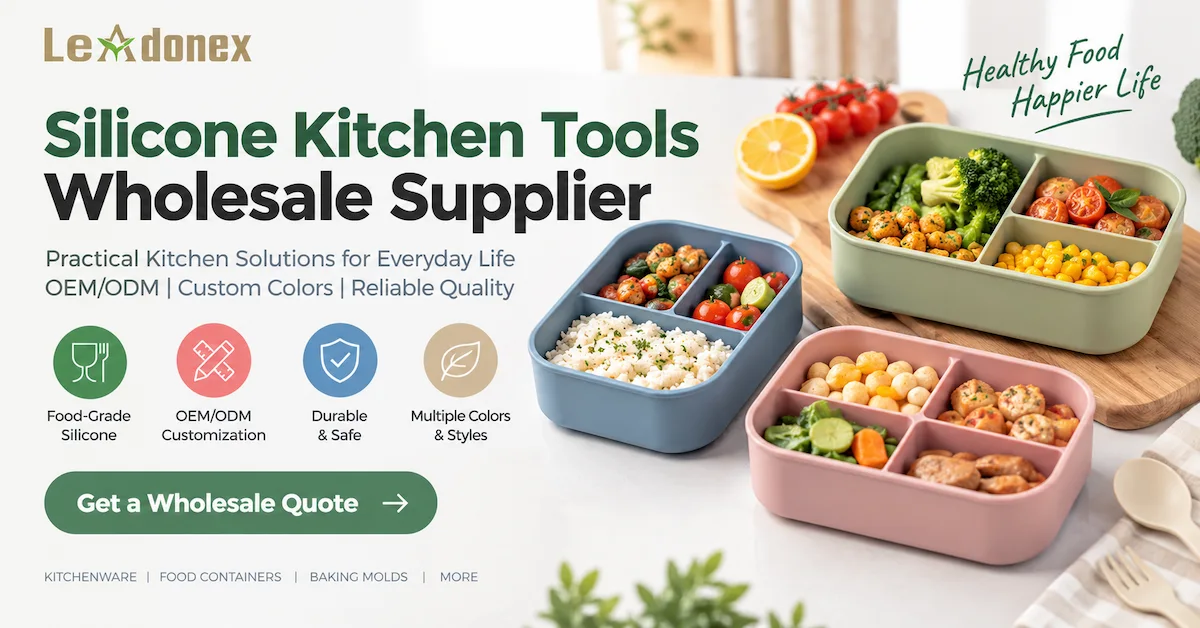
A silicone kitchen tools wholesale supplier should help you establish exactly what you are buying, how it will be customized, and what will define an acceptable shipment. Start with five purchasing priorities: product suitability, component specifications, evidence supporting intended use, sample approval, and repeat-order consistency. Leadonex’s kitchenware and molds range provides a starting point for food-storage and baking product projects, including foldable lunch boxes and silicone molds. For a utensil-led collection containing spatulas, turners, brushes, or other tools, request an itemized proposal identifying the available products and any development requirements. The goal is not simply to find a broad catalog; it is to establish a product range that your purchasing team can evaluate, your sales team can describe accurately, and your supplier can reproduce against an agreed specification.
Match Your Purchasing Requirements to Your Sales Channel
Define the buyer and sales channel before selecting products. For a private-label kitchenware brand, prioritize coordinated colors, distinctive configurations, packaging, and control over design changes. For an importer or distributor, give equal attention to individual product quantities, carton information, replenishment conditions, and documentation. Retail buyers should establish packaging dimensions, barcode requirements, and how the product will be displayed. An online seller should review the complete sellable unit, including accessories, instructions, and protective packaging, rather than approving the main silicone component alone. Keep this sourcing process focused on planned wholesale or development projects. A single replacement utensil, an unspecified mixed assortment, or a product expected to meet unverified professional-use conditions needs a different brief before a meaningful quotation can be prepared.
Compare Product Designs Against Specific Kitchen Applications
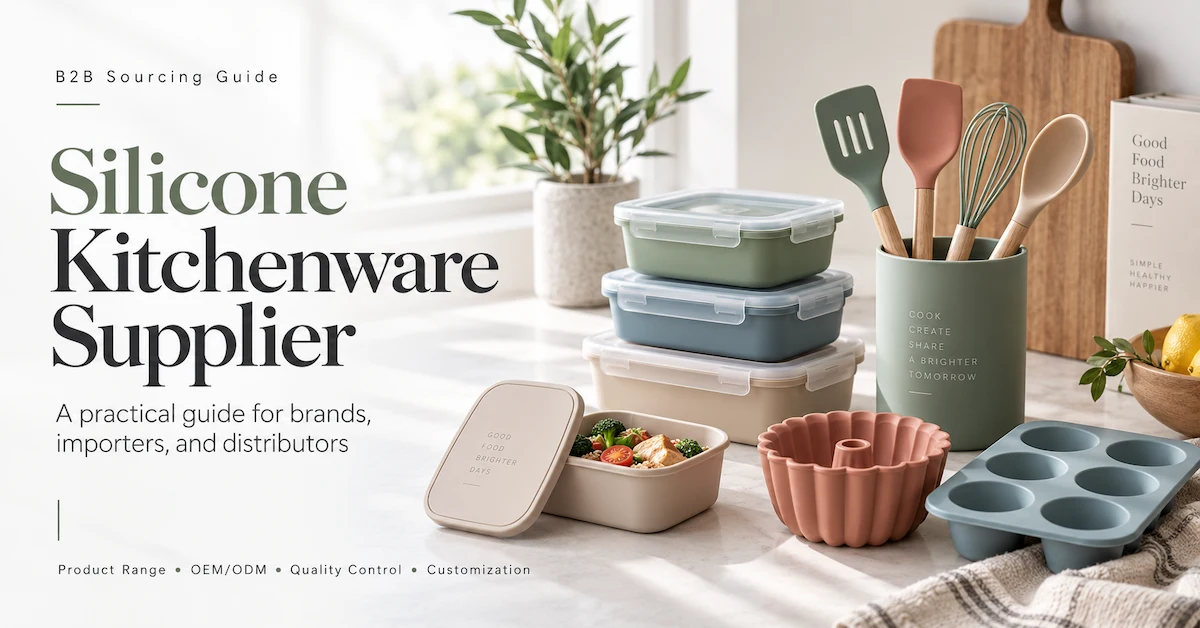
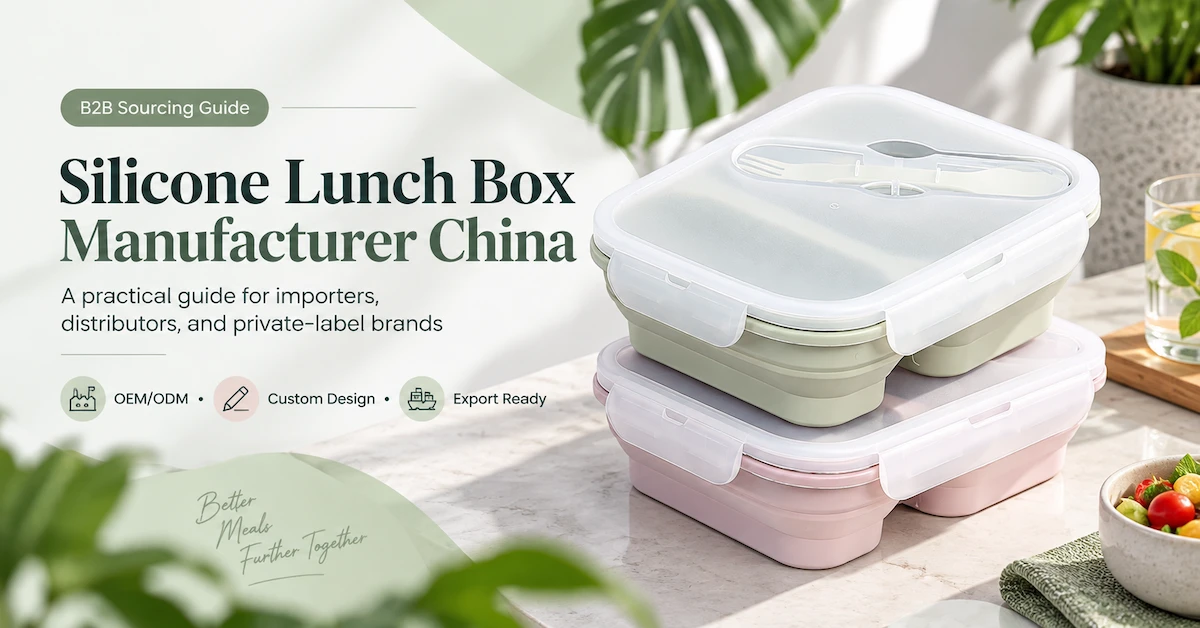
Build your shortlist around a recognizable use case: packed lunches, compact kitchen storage, portioned baking, or a coordinated preparation set. Leadonex’s rectangular foldable lunch box is described with a collapsible body, side closures, and a lid vent; its single-compartment version includes a knife and fork. These are distinct configurations, not interchangeable listings. Use the comparison below as a purchasing framework: the product descriptions reflect published listings, while the application choices and checks are recommendations for evaluating samples.
| Product design | Published configuration | Suggested assortment role | What to confirm before ordering |
|---|---|---|---|
| Rectangular foldable lunch box | Collapsible body, side closures, and lid vent | Meal preparation and compact food-storage collections | Expanded and folded dimensions, capacity, closure operation, vent instructions, and component materials |
| Single-compartment lunch box with knife and fork | One food compartment with accompanying cutlery | Packed-lunch and portable dining collections | Accessory configuration, storage arrangement, material identification, and complete-set inspection |
| 15-cavity silicone baking mold | Fifteen-cavity mold listed for cake, jelly, and pudding applications | Baking and portioned-dessert collections | Cavity dimensions, portion capacity, handling when filled, release performance, and intended-use instructions |
The fifteen-cavity configuration is identified in Leadonex’s product listing. Confirm the current specification and food-use instructions before incorporating it into a retail range.
Create a Specification Sheet Before Comparing Wholesale Prices
Give every shortlisted product a reference number and a written specification. Without this common basis, a quotation may describe a different configuration from the sample your team reviewed. Ask each silicone kitchen tools wholesale supplier to quote against the same information, and identify anything that remains undecided. The following table is a purchasing specification template, not a statement that every Leadonex product shares the same material, performance, or commercial conditions.
| Specification item | Information to confirm | Approval reference |
|---|---|---|
| Product identity | Product name, reference number, drawing revision, and intended use | Approved product sheet |
| Materials and components | Silicone body, lid, handle, reinforcement, accessories, and other applicable parts | Component-level material list |
| Dimensions and capacity | Overall size, usable capacity, folded size where relevant, and agreed tolerances | Drawing and measured sample |
| Physical characteristics | Agreed hardness scale and value where relevant, wall thickness, and weight | Technical specification |
| Color and surface | Color reference, texture, finish, and permitted variation | Approved physical sample |
| Branding | Logo method, location, dimensions, and artwork revision | Artwork and branded sample |
| Use and care | Approved temperature conditions, cleaning methods, and component-specific limitations | Supported care instructions |
| Packaging | Set contents, labels, barcode, protective packaging, and carton configuration | Approved packaging sample |
| Quality acceptance | Inspection points, functional checks, sampling arrangement, and defect criteria | Agreed inspection plan |
Evaluate Materials at Component Level, Not Just Product Level
For a silicone kitchenware project, request a material description for each relevant component rather than relying on the phrase “silicone product.” A lunch box brief should distinguish the body, lid, closure, vent, and supplied utensils. A cooking-tool brief should identify the working head, handle, and any internal reinforcement or detachable connection. Ask the supplier to explain the proposed construction against your intended use, including the required balance between flexibility, support, grip, and cleaning access. For heating and cleaning instructions, require confirmation of which parts the instructions cover. Do not approve a whole-set claim simply because documentation is available for one component. This approach gives the supplier a clear technical question to answer without assuming that all products in the same category have identical construction or use conditions.
Review Workmanship Through Tasks the Product Must Perform
A useful sample review should show whether the product performs its intended task, not merely whether its color looks correct. For a spatula project, define the desired scraping behavior, handle comfort, and connection security where separate parts are used. For a foldable container, examine folding and reopening, rim shape, lid alignment, closure operation, and handling when filled. For a baking mold, assess cavity consistency, filling, transfer to a supporting tray where required, and release using the intended application. Record surface defects, excess material at edges, poorly finished seams, and inconsistent branding as separate observations. Agree on the test conditions and acceptance criteria before requesting revisions. A silicone kitchen tools wholesale supplier can respond more precisely to “the lid does not seat evenly at this corner” than to a general request to “improve quality.”
Connect Quality Checks and Documentation to the Exact Product
Build the inspection plan around the specification and the approved sample. Ask which checks will cover incoming materials, in-process production, finished-product function, appearance, accessories, and packing. Request supporting reports or certificates for the proposed product and intended market, then review the product identification, issuing organization, date, test scope, and stated conditions. Treat a certification logo or a general material description as a prompt to request documentation, not as the complete purchasing record. Keep the approved sample, specification, artwork, packaging version, and inspection criteria together so that the production and receiving teams work from the same references. For repeat orders, require written confirmation before material, component, tooling, or packaging changes are introduced. This makes quality acceptance a defined purchasing requirement rather than a discussion that begins after delivery.
Choose the Right Level of OEM or Private-Label Customization
Separate appearance changes from structural development at the beginning of the project. Leadonex’s OEM/ODM services describe customization covering size, color, structure, logo, packaging, and labeling, including Pantone-based color selection and new-mold development for structural changes. For an existing design, ask which branding and packaging options can be applied without changing the main product geometry. For a new shape, capacity, cavity arrangement, or functional feature, request a development proposal identifying the drawing, tooling, sampling, and approval stages. Confirm the selected options individually rather than assuming every method applies to every item. For custom tooling, document ownership, storage, maintenance, design confidentiality, and the treatment of later modifications before authorizing the project.
Clarify MOQ by Product, Color, and Packaging Configuration
Ask for the minimum order quantity, or MOQ, at the level at which you will actually purchase. Confirm whether the minimum applies to each product, each color, a complete set, a packaging design, or the total order. For example, a proposed collection containing four products in three colors creates twelve product-color combinations; ask the supplier to quote that exact mix rather than an undefined total quantity. Request separate terms for existing designs, branded versions, and new development. A silicone kitchen tools wholesale supplier should also clarify whether different items can be combined in one shipment and whether replenishment conditions differ from the opening order. Do not build a launch budget around an assumed universal MOQ. Use a written assortment breakdown to determine which variants are practical for the first order.
Plan Lead Time Around Approval Milestones and Available Capacity
Leadonex’s published development process moves through requirements analysis, design, sample production, mass production after sample confirmation, quality inspection, and delivery. Use that sequence to request a project schedule rather than relying on a single delivery estimate. Separate design review, tooling where applicable, sample revisions, documentation, production, inspection, and shipment readiness. Ask when the quoted production period begins and which approvals must already be complete. For capacity planning, request confirmation of the production window available for your actual product mix, not only a company-wide output figure. Clarify whether quantities are measured as individual pieces or complete sets. Before setting a replenishment date, also confirm artwork, packaging availability, and whether any specification changes will require another approval cycle.
Compare the Complete Purchase Scope, Not Only the Unit Price
Compare quotations only after aligning product configuration, quantity, packaging, testing, inspection, and shipping responsibilities. Ask whether tooling, logo setup, sample revisions, documentation, and special packaging are included or quoted separately. For a set, verify every included item and identify how missing, damaged, or nonconforming pieces will be handled. Review carton dimensions and packing quantities before comparing freight quotations, and request packaging samples before approving final retail presentation. Avoid assigning a lower cost level to a product simply because one quotation excludes services included in another. When choosing a silicone kitchen tools wholesale supplier, the useful comparison is the cost of the same agreed deliverable. Put exclusions, assumptions, payment milestones, and change charges in writing so that purchasing decisions do not depend on an incomplete headline price.
Prepare an RFQ That Produces a Useful Product Proposal
A request for quotation, or RFQ, should identify the product range, destination market, sales channel, expected quantity by variant, and whether you need an existing design or new development. Add drawings or reference samples, target dimensions, required accessories, brand colors, logo files, packaging requirements, and the intended launch schedule. State which performance claims you expect to make so that supporting information can be reviewed before packaging is finalized. Through Leadonex’s customization inquiry, buyers can present a defined project rather than a broad request for “silicone kitchen products.” Where some decisions remain open, ask for clearly separated options. For example, request one proposal based on an existing configuration and another showing the scope of a modified design, with differences in development, sampling, and order conditions identified.
Frequently Asked Questions
1. How do I choose a silicone kitchen tools wholesale supplier for a private-label brand?
Start with product fit, then compare specifications, customization scope, sample quality, supporting documentation, and replenishment conditions. Ask suppliers to quote the same product configuration. Prefer a proposal that identifies open questions and approval requirements over one that offers broad assurances without defining the deliverable.
2. Does Leadonex offer only cooking utensils?
Leadonex’s kitchenware listings also include foldable food containers and silicone baking molds. Review the product range and submit an itemized inquiry for your intended collection. For cooking utensils or new configurations, request confirmation of the exact products and development options available.
3. What information is needed for an accurate wholesale quotation?
Provide the product reference or drawing, quantity by product and color, component configuration, branding, packaging, destination, and required delivery schedule. Identify any testing or documentation requirements. Ask the quotation to distinguish included services from optional work and separately charged development.
4. Can I customize colors, logos, and packaging?
Leadonex describes color, logo, packaging, and labeling customization within its OEM/ODM offering. Confirm the available method for the selected product, then approve a physical sample and final artwork. Record logo placement, color references, packaging contents, and version numbers before production.
5. Is there one MOQ for all silicone kitchen products?
Do not assume a single minimum applies across the range. Request MOQ confirmation for each product, color, and packaging configuration in your proposed order. Ask separately about existing designs, new development, mixed shipments, and later replenishment orders.
6. Can silicone kitchen products share the same temperature and cleaning instructions?
Do not approve shared instructions without product-level confirmation. Request supported conditions for each item and relevant component, including lids, handles, closures, and accessories. Where a set combines different constructions, ask for care instructions that clearly distinguish their permitted uses.
7. What should I check in a pre-production sample?
Review dimensions, appearance, color, branding, relevant functional tasks, accessories, and packaging. Compare the sample with the agreed specification and record deviations. Identify which features are approved and which still require correction, then retain the final approved sample as an order reference.
8. How can I check whether bulk production matches the sample?
Agree on inspection criteria before production, including measurements, functional checks, appearance limits, set contents, and packaging. Specify the sampling arrangement and required records. Ask that proposed changes be submitted for approval rather than introduced without updating the purchasing documents.
9. What should I confirm before paying for custom tooling?
Confirm the drawing revision, development scope, sample process, revision responsibilities, ownership terms, maintenance arrangements, and confidentiality expectations. Identify what happens when the design changes after approval. Ensure the tooling agreement and product specification refer to the same project.
10. How should I plan repeat wholesale orders?
Maintain a controlled record of the approved product, materials, color, artwork, packaging, and inspection requirements. Send the revision reference with each reorder and request confirmation of production availability. Resolve requested changes before authorizing the new batch rather than treating every reorder as an identical transaction.
Conclusion
The right silicone kitchen tools wholesale supplier should help turn a product idea into a clearly specified, testable, and repeatable order. For kitchenware brands, importers, and distributors, that means evaluating the actual configuration, approving components and packaging, reviewing supporting documentation, and establishing practical sampling and replenishment conditions. Begin with products that fit your sales channel, then confirm customization and development requirements before comparing final quotations. To discuss a Leadonex kitchenware project, contact the team with your product references, target market, quantities, branding, and packaging requirements. A detailed brief provides the foundation for a useful product proposal—and an approved specification provides the reference for every subsequent order.