
What Should Buyers Expect from a Silicone Lunch Box Manufacturer in China?
When an importer searches for a silicone lunch box manufacturer China, the real purchasing question is not simply whether a factory can produce a container that looks similar to a reference image. A suitable manufacturing partner should help turn a selected product or custom concept into a controlled specification covering dimensions, capacity, components, materials, color, branding, packaging, functional checks, and repeat-order requirements. Leadonex currently presents silicone food containers within its Kitchenware & Molds range, giving kitchenware importers and private-label brands a practical starting point for evaluating foldable lunch box projects. The buyer should then move beyond catalog selection and establish what will be approved during sampling, what will be checked before shipment, and what must remain consistent when the product is reordered.
This distinction matters because manufacturing quality is not defined only by the first sample. A product that looks acceptable in one presentation sample still needs a clear production reference if it is expected to remain consistent across colors, packaging versions, and future purchase orders. For B2B sourcing, the goal is therefore to create a specification that both the buyer and manufacturer can repeatedly understand and inspect.
Which Buyers Benefit Most from Working Directly with a Manufacturer?
Direct manufacturer sourcing is most useful for importers, wholesalers, kitchenware brands, chain retailers, e-commerce private-label sellers, and distributors that expect repeated orders or require some degree of product customization. An importer may prioritize stable specifications, carton information, packing efficiency, and replenishment; a private-label brand may focus more heavily on color, logo, accessories, and retail packaging; while a distributor may need several compatible configurations within one lunch box range.
Direct manufacturing may be less suitable when the buyer has not yet decided what product is needed, cannot estimate expected quantity, or only wants a very small assortment without customization. In those cases, buyers should first review the broader Leadonex product catalog and narrow the project to a realistic product direction. A manufacturer can evaluate a defined application more effectively than an inquiry that simply asks for “all silicone lunch boxes at the lowest price.”
Start with the Application Before Comparing Lunch Box Models
A lunch box designed for office meals does not necessarily need the same configuration as one intended for meal preparation, school use, compact kitchen storage, outdoor dining, or travel. Application should therefore come before model selection. Buyers should define who will use the product, how food will be stored or carried, what sales channel will sell it, whether accessories are required, and what type of packaging the market expects.
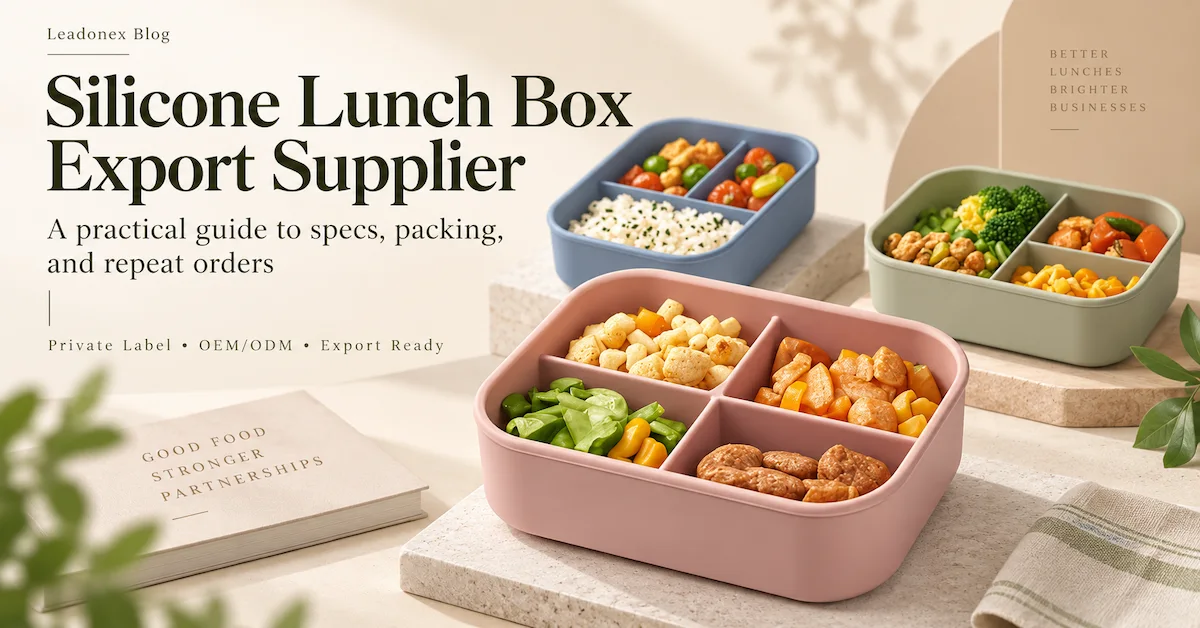
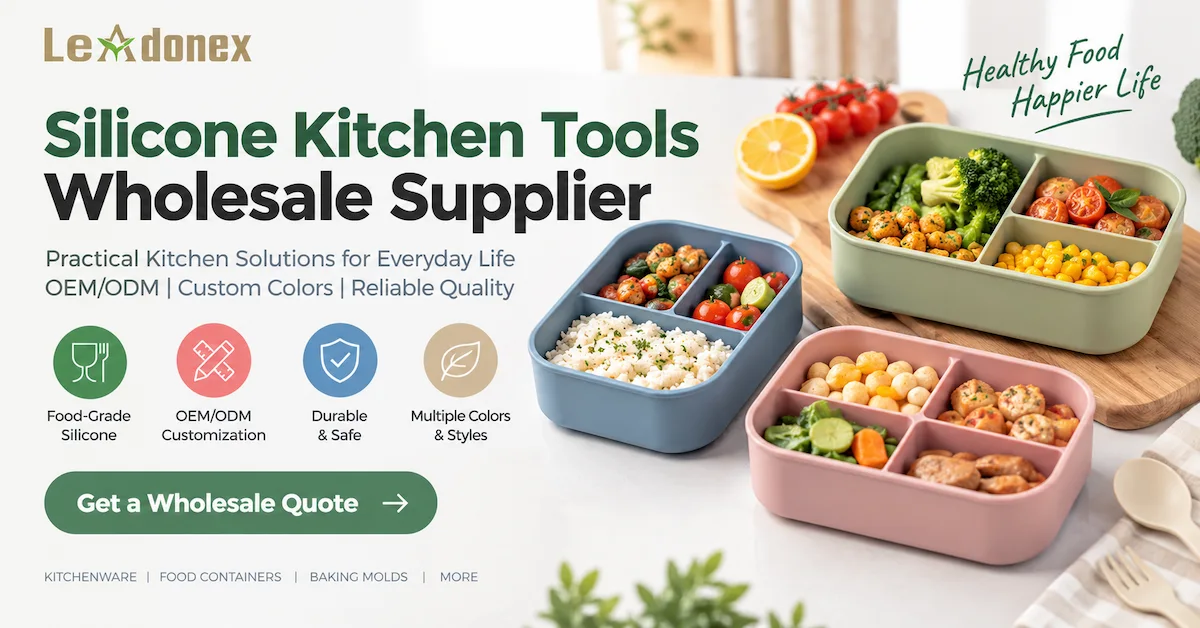
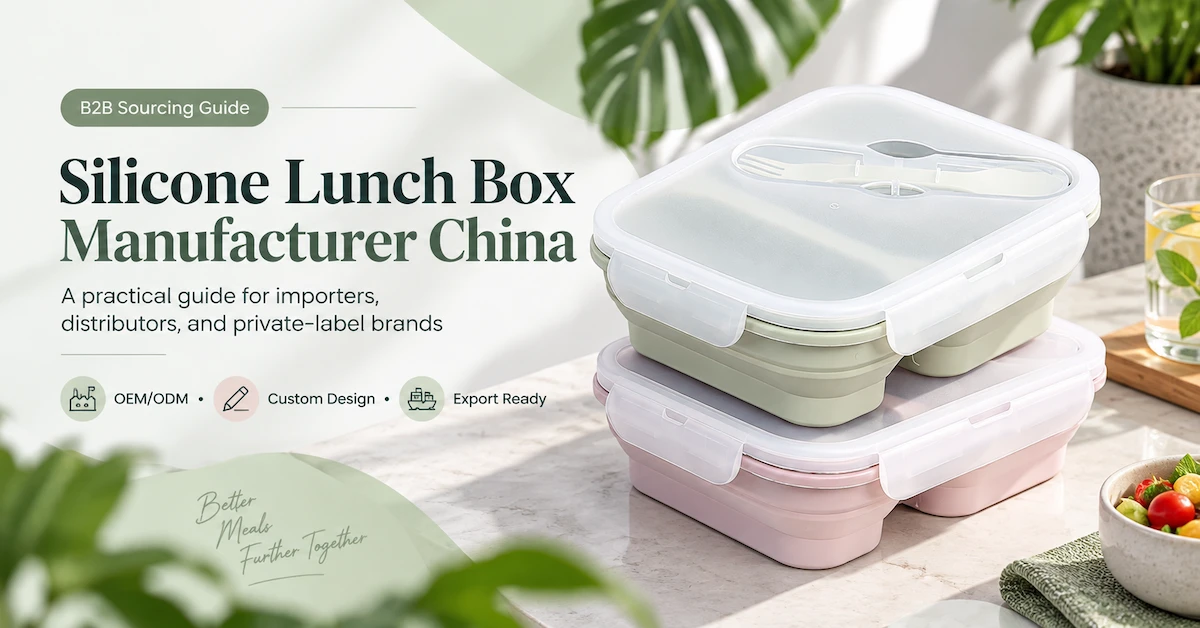
Leadonex currently shows a rectangular foldable lunch box that can serve as a useful example of how application influences sourcing. A collapsible body can be relevant to customers who value storage efficiency, while side closures and a lid structure create additional items that must be checked during product approval. Instead of describing the product only as “foldable,” an importer should ask how the container behaves when expanded, collapsed, filled, closed, packed, and repeatedly handled.
Create a Manufacturing Specification Before Asking for the Final Price
One of the most useful differences between casual sourcing and professional sourcing is whether the buyer controls a written product specification. A factory quotation should refer to an identifiable product configuration rather than only an image or general description. This helps buyers compare quotations fairly and reduces the risk that different suppliers are pricing different constructions.
| Specification Area | What the Buyer Should Confirm | Why It Matters |
|---|---|---|
| Product identity | Product name, SKU, drawing or reference version | Prevents confusion between similar products |
| Dimensions | Expanded size, folded size where applicable, key dimensions | Defines physical acceptance |
| Capacity | Agreed usable volume and measurement basis | Avoids unclear capacity comparisons |
| Components | Body, lid, closures, vents, utensils or accessories | Clarifies complete product scope |
| Materials | Material information for each relevant component | Supports product and market review |
| Color | Standard color or agreed color reference | Controls private-label consistency |
| Branding | Logo method, size, position and artwork | Prevents production artwork errors |
| Functional requirements | Folding, lid fit, closure, accessory fit and other tasks | Turns vague quality into checkable criteria |
| Packaging | Unit pack, labels, inserts, carton quantity | Affects retail and logistics |
| Inspection | Appearance, dimensions, function and packing checks | Defines shipment acceptance |
The specification can develop during sampling, but the final approved version should become the reference for production. If dimensions, accessories, packaging, or artwork later change, the revision should be recorded instead of silently replacing the original requirement.
Evaluate Materials by Component, Not by a Single Product Label
Buyers often search for a silicone lunch box and naturally focus on the silicone body. However, a complete product may also contain a lid, closures, vent components, utensils, or other accessories. These parts may not share the same construction or intended conditions of use. For this reason, a silicone lunch box manufacturer should identify the relevant components and allow buyers to review their materials separately where necessary.
This approach is especially important when preparing packaging claims or use instructions. If a buyer intends to state that a product can be used under certain heating, freezing, cleaning, or storage conditions, those claims should be confirmed for the exact product and applicable components rather than assumed from a general category description. The safest purchasing method is to link each important claim to the final approved product specification instead of extending information from one item across the entire range.
Check Product Structure and Workmanship Through Real Functions
A manufacturing sample should be evaluated by how it performs, not only by how it looks in a photograph. For a collapsible lunch box, buyers can check whether the folding sections expand evenly, whether the base remains stable, whether the rim is consistent, whether the lid aligns correctly, and whether closures operate as expected. If a vent is included, its position and operation should be reviewed. If cutlery is supplied, the buyer should inspect the entire set and confirm how the accessories are packed or stored.
Surface workmanship can be inspected for deformation, inconsistent edges, excess material, contamination, color variation, visible defects, uneven branding, and component-fit issues. Instead of reporting “poor quality,” a useful sample review should state exactly what was observed, where the issue occurred, and what result is expected in the revised sample. Specific feedback is easier to reproduce during manufacturing than subjective descriptions such as “make it more premium.”
Compare Existing Lunch Box Directions Before Starting New Tooling
A completely new mold is not automatically the best route for every private-label buyer. Existing platforms may already satisfy the functional requirements, allowing the brand to focus on colors, logo, packaging, or assortment. Structural development becomes more relevant when dimensions, compartment arrangements, capacity, geometry, or functions must be materially changed.
| Development Direction | Typical Scope | Main Benefit | Main Purchasing Risk | Best Fit |
|---|---|---|---|---|
| Existing foldable lunch box | Existing structure with confirmed available options | Lower development complexity | Limited structural differentiation | Importers and first product launches |
| Lunch box with knife and fork | Container plus accessory configuration | More complete portable-meal concept | Additional accessory and packing checks | Retail sets and commuter products |
| Existing design + private label | Color, logo, packaging and approved configuration changes | Faster brand differentiation | Buyers may assume more customization than is feasible | Private-label brands |
| New custom structure | New dimensions, compartments or geometry | Greater product differentiation | Tooling cost and more sample revisions | Established brands with clear product briefs |
Leadonex provides a dedicated customization service for projects that require more than selecting an existing product. Buyers should ask which requested changes can be made within current tooling and which require a new development process before comparing quotations.
How Should Buyers Evaluate Factory Capability?
Factory capability should be evaluated through the processes relevant to the proposed product rather than broad promotional terms such as “advanced factory” or “strong production.” For a silicone lunch box project, ask how product requirements move from drawing or sample approval into production, how colors and branding are controlled, how functional characteristics are checked, and how packaging is confirmed before shipment.
Buyers should also distinguish between capability and evidence. A factory may describe R&D, manufacturing, testing, or customization services, but a purchasing decision should still be based on what applies to the exact project. Leadonex’s OEM/ODM page provides an overview of its development and customization direction. For a specific lunch box order, the buyer should confirm which stages, equipment, tests, or development resources will actually be used rather than assuming every company-level capability automatically applies to every model.
Define Quality Control Before Mass Production
Quality control should be planned before the purchase order reaches mass production. By that point, the buyer should know which measurements are critical, what appearance issues are unacceptable, what product functions will be checked, what accessories must be present, and how retail and shipping packaging will be inspected.
A useful quality plan can include dimensional checks, color comparison, surface inspection, folding and closure checks where relevant, component completeness, logo inspection, retail-pack verification, and carton confirmation. The exact inspection method should reflect the selected model rather than using one universal checklist for every silicone product.
The final approved sample is valuable, but it should not be the only reference. Samples cannot always communicate tolerances, artwork versions, packaging quantities, or acceptance limits. A written specification plus an approved sample gives both buyer and manufacturer a clearer basis for production and pre-shipment inspection.
Treat Documentation as Product-Specific Information
Importers often ask a China manufacturer whether products are “certified,” but the purchasing question should be more precise: what document is available, which product or material does it cover, what market or use requirement is relevant, and whether the ordered configuration falls within that scope. A company-level document or report associated with another model should not automatically be treated as proof for a newly customized lunch box.
Buyers should therefore communicate destination-market and customer documentation requirements early in the project. This is particularly important when changes involve materials, colors, components, or structural development. If a retailer requires particular supporting information, it is much easier to discuss those requirements during product selection than after packaging has been printed and goods are ready for shipment.
MOQ Should Be Evaluated by SKU, Color, Packaging, and Customization Level
There is rarely one useful MOQ question for every project. A buyer sourcing one existing lunch box in a standard configuration has a different production requirement from a brand ordering three sizes, four custom colors, branded packaging, and accessories. Instead of asking only “What is your MOQ?”, buyers should provide an assortment table.
For example, state the planned quantity for each model, each color, each packaging version, and each market where the product will be sold. Then ask which combinations are practical for the factory. This reveals whether the minimum applies per model, per color, per customized component, or to another production unit.
Leadonex does not need to publish one universal MOQ for every silicone lunch box for buyers to have a productive discussion. A project-specific inquiry through the contact page allows commercial conditions to be matched to the actual configuration instead of applying a generic number that may not fit the order.
Production Lead Time Should Be Divided into Stages
Buyers comparing a silicone lunch box manufacturer China should avoid evaluating delivery capability using only one number such as “30 days.” A meaningful schedule depends on whether the product is existing or new, whether a color must be developed, whether logo samples are required, whether packaging artwork is ready, and whether tooling or structural changes are involved.
A practical project timeline can include requirement confirmation, product or tooling review, sample preparation, buyer feedback, sample revision, packaging approval, production release, manufacturing, inspection, and shipment preparation. For a repeat order with unchanged specifications, some development stages may no longer be necessary; for a newly customized product, they may represent a significant part of the total project schedule.
The most useful question is therefore not simply “What is the lead time?” but “Which event starts the production lead time, and which buyer approvals must be completed first?”
Why Factory Price Should Not Be Compared Without the Full Scope
A lower quoted unit price may represent a different product, material scope, packaging requirement, inspection standard, or customization level. Buyers should first align the specification and then compare prices. Tooling, samples, custom colors, printing, retail packaging, accessories, testing requirements, inspection, and logistics can all change the total project cost.
For foldable lunch boxes, packing configuration can also influence commercial planning because collapsed dimensions may affect the number of products that fit into a carton. However, actual logistics benefits should be calculated from the approved packing method and final carton data rather than assumed from the word “collapsible.”
A strong purchasing comparison should therefore identify what the unit price includes, which costs are one-time development charges, which costs repeat with every order, and what conditions could cause the quotation to change.
Use OEM/ODM to Create a More Differentiated Lunch Box Range
A China silicone lunch box project can range from simple private labeling to a more involved product-development program. Leadonex’s OEM/ODM service and customization page provide entry points for projects involving product selection and customized requirements.
The buyer should separate customization into levels. Branding-level customization may involve an approved color, logo, or packaging format. Configuration-level customization may involve accessories, set combinations, or adjustments that remain compatible with existing product platforms. Structural ODM development may involve changes to dimensions, compartments, geometry, or mold design.
This distinction helps purchasing teams estimate project complexity before development starts. It also prevents a common misunderstanding in which the buyer expects a structural redesign while the quotation covers only logo and packaging changes.
Protect Repeat Orders with Version Control
The first successful order is only part of the sourcing task. A reliable silicone lunch box program should also be reproducible months later. Buyers should store the approved specification, sample reference, color information, artwork, packaging file, accessory list, and inspection requirements under identifiable revision numbers.
When a repeat order is issued, these references should be included again instead of relying on statements such as “same as before.” If the product changes, create a new revision and document what changed. This becomes particularly valuable when a brand sells the same lunch box in several countries, colors, or packaging formats.
Change control also protects the manufacturer because it provides a clear record of buyer-approved requirements. Both sides can distinguish an intentional product update from an unwanted production variation.
What Should You Send a Silicone Lunch Box Manufacturer for a Quotation?
A useful RFQ should contain enough information for the manufacturer to understand both the technical product and the commercial project. Provide a product link, drawing, reference image, or sample; expected quantity by model and color; target dimensions or capacity; number of compartments if relevant; required components and accessories; desired colors; logo artwork; packaging format; destination market; and approximate purchase schedule.
If the product needs to be modified, explain which features must change and why. If the project is still open to alternatives, state which requirements are fixed and which can be adjusted. Buyers can begin from Leadonex’s Kitchenware & Molds range and then submit a more detailed request through Customization or Contact Us.
A complete RFQ gives a manufacturer a much better basis for evaluating feasibility, development scope, sample requirements, and commercial conditions than a request for “your best price.”
Frequently Asked Questions
1. What should I check when choosing a silicone lunch box manufacturer China?
Check whether the manufacturer can work from a controlled product specification, provide samples for approval, clarify component materials, support required customization, define quality checks, prepare suitable packaging, and reproduce the approved configuration for repeat orders. Avoid choosing only from photographs and headline prices.
2. Is buying directly from a manufacturer always better than buying from a trading company?
Not necessarily. The more important question is whether the supplier can provide the product range, technical communication, customization, quality control, commercial service, and repeat-order reliability your business requires. Direct manufacturing can be useful for deeper customization, but the actual project capability should still be verified.
3. Can I customize the color and logo of a silicone lunch box?
Leadonex provides OEM/ODM and customization services. The specific color, logo method, positioning, packaging option, development requirements, and commercial conditions should be confirmed for the selected product before production.
4. Do I need a new mold for a private-label lunch box?
Not always. Color, logo, packaging, and some configuration changes may be possible with an existing product. Significant changes to dimensions, compartments, geometry, or structural features may require new tooling or a separate development process.
5. What should I inspect on a foldable silicone lunch box sample?
Check expanded and folded dimensions, stability, folding behavior, rim and wall consistency, lid fit, closures or vent components where applicable, color, logo, surface quality, accessories, and packaging. Compare these points with a written specification instead of approving only the appearance.
6. Does every silicone lunch box have the same material and temperature limits?
Buyers should not assume this. Confirm the exact product construction and intended conditions for each relevant component. Product-level instructions should be based on the approved configuration rather than copied from another model.
7. How is MOQ determined for a China silicone lunch box order?
MOQ can vary according to the model, color, customization, packaging, accessories, and whether new development is required. Provide your actual SKU and quantity breakdown so the manufacturer can evaluate the project instead of relying on a universal figure.
8. How can importers reduce quality problems on bulk orders?
Create a written specification, approve a final sample, define measurable inspection criteria, control artwork and packaging revisions, and confirm the final production version before mass production. Use the same references again for pre-shipment inspection and repeat orders.
9. What information is needed for a custom lunch box quotation?
Provide the product concept or selected model, dimensions or capacity, expected quantity, colors, logo, accessories, packaging, destination market, intended use, required documentation, and preferred schedule. Include reference drawings or samples where available.
10. How should I start a silicone lunch box project with Leadonex?
Review the Kitchenware & Molds products, identify an existing product direction or prepare a custom concept, and then send your quantity, configuration, color, branding, packaging, market, and schedule requirements through Leadonex Contact Us.
Conclusion
Selecting a silicone lunch box manufacturer China is a manufacturing and supply-chain decision rather than a simple product-price comparison. Importers, wholesalers, and private-label brands should evaluate product structure, component materials, sample approval, customization scope, workmanship, quality criteria, packaging, commercial conditions, and repeat-order control before releasing a bulk order. Leadonex’s Kitchenware & Molds range, OEM/ODM service, and customization support provide practical starting points for buyers evaluating existing or customized silicone food-container projects. When comparing a silicone lunch box manufacturer China, prepare a detailed RFQ first and ask each supplier to quote against the same approved scope; this makes price, development complexity, quality expectations, and future replenishment much easier to compare. To evaluate a specific project, submit the selected product or concept, quantity by variant, dimensions, colors, branding, packaging, destination market, and schedule through Leadonex Contact Us.