
What Does Silicone Kitchenware OEM Actually Include?
Silicone kitchenware OEM is more than placing a logo on an existing kitchen product.
For professional buyers, OEM can involve product specification, material selection, structural adjustments, color matching, mold development, sampling, silicone molding, quality control, branding, packaging, and bulk production.
The exact level of development depends on how differentiated the final product needs to be.
A brand may start with an existing silicone food container and only change its color and packaging. Another buyer may arrive with a completely new baking mold drawing that requires engineering review and new tooling.
That is why silicone kitchenware OEM projects should first be divided into three development levels.
| OEM Route | Typical Customization | Tooling Requirement | Development Complexity | Best For |
|---|---|---|---|---|
| Existing product private label | Color, logo, packaging | Usually no new mold | Low | New brands, importers |
| Existing design modification | Dimensions, cavities, details | May require tooling changes | Medium | Growing brands |
| Fully custom product | Shape, structure, function, mold | New mold usually required | High | Proprietary product lines |
Leadonex positions its business around both OEM and ODM silicone manufacturing and supports product development, mold making, molding, branding, and packaging.
Buyers can review its current Kitchenware & Molds range or use the custom silicone manufacturing service when a project requires deeper product development.

Who Needs Silicone Kitchenware OEM?
OEM is most valuable when a buyer needs commercial differentiation rather than a completely standard wholesale product.
Kitchenware Brands
Established brands normally require tighter control over:
- Product dimensions
- Material specifications
- Pantone colors
- Surface finish
- Logo placement
- Product functionality
- Retail packaging
- Reorder consistency
For these buyers, OEM is part of brand building rather than simply procurement.
Importers and Distributors
Importers often need a balance between customization and supply-chain efficiency.
Their priorities may include:
- Reliable repeat production
- Market-specific compliance
- Competitive landed cost
- Multiple SKU options
- Stable lead times
- Consolidated packaging
- Documentation support
Private Label Sellers
Private label projects commonly begin with existing products because this reduces development complexity.
Customization can include:
- Brand color
- Logo
- Sleeve
- Color box
- Labels
- Product set combinations
Once sales volume is proven, the brand may move to proprietary molds or structural modifications.
Product Developers
Product managers and designers have different needs.
They may provide:
- Sketches
- CAD drawings
- STEP files
- Reference samples
- Functional requirements
- Competitor products requiring redesign
Their primary question is not “What products do you have?”
It is:
“Can this design be manufactured reliably in silicone at the required cost and volume?”
When Should You Choose OEM Instead of Standard Wholesale?
Not every project requires OEM development.
Standard wholesale may be more practical when:
- Speed to market is the highest priority
- Product differentiation is not essential
- Initial volumes are small
- Tooling investment is difficult to justify
- The buyer wants to test demand first
OEM becomes more attractive when:
- Your competitors sell similar products
- Brand colors are commercially important
- Existing sizes do not meet your requirements
- A special cavity or functional feature is needed
- Retail packaging must match your brand
- You want a proprietary SKU
- Long-term repeat orders justify development investment
A useful strategy for new buyers is:
existing product → private label validation → product improvement → proprietary tooling
This reduces upfront risk while creating a path toward stronger differentiation.
Which Products Can Be Developed Through Silicone Kitchenware OEM?
Silicone kitchenware covers several product groups with different development requirements.
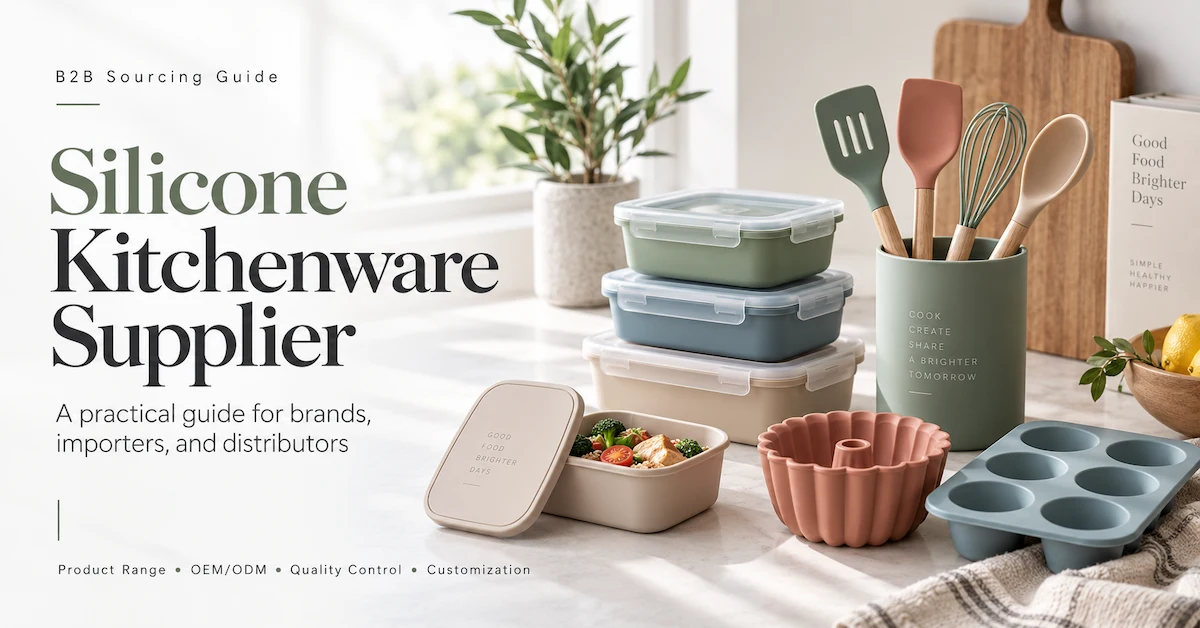
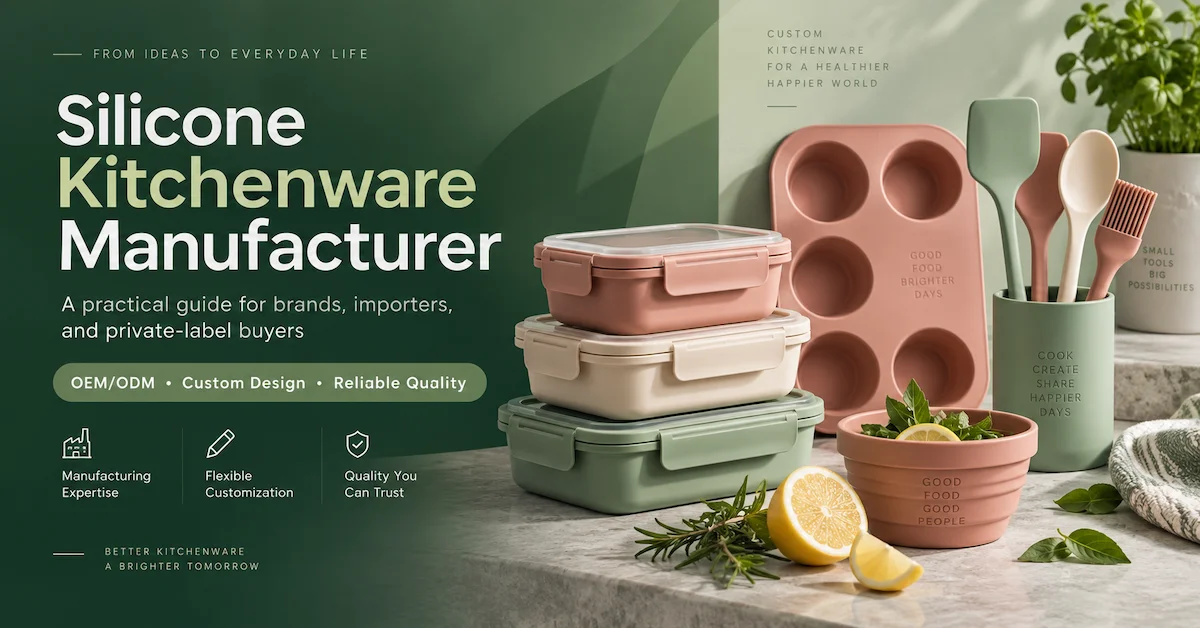
Leadonex currently organizes silicone kitchenware within its Kitchenware & Molds product section, including silicone food containers and molded kitchenware categories.
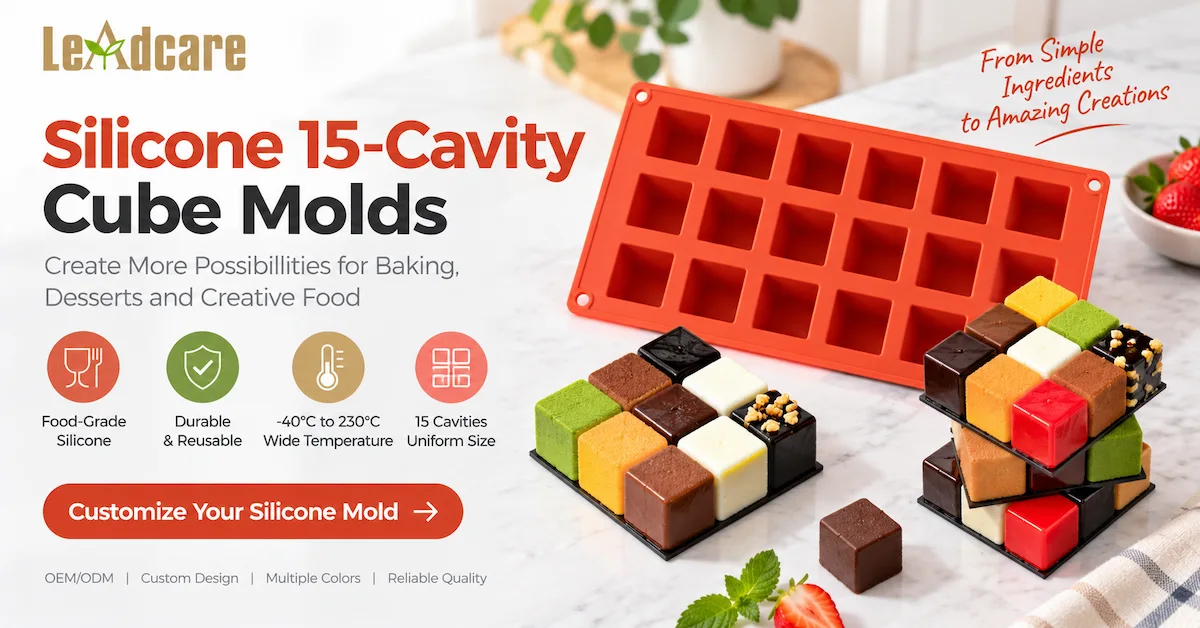
Silicone Baking Molds
OEM variables can include:
- Mold dimensions
- Number of cavities
- Cavity shape
- Wall thickness
- Product hardness
- Surface texture
- Color
- Logo
- Packaging
For baking brands, cavity design is particularly valuable because it allows products to be visually differentiated.
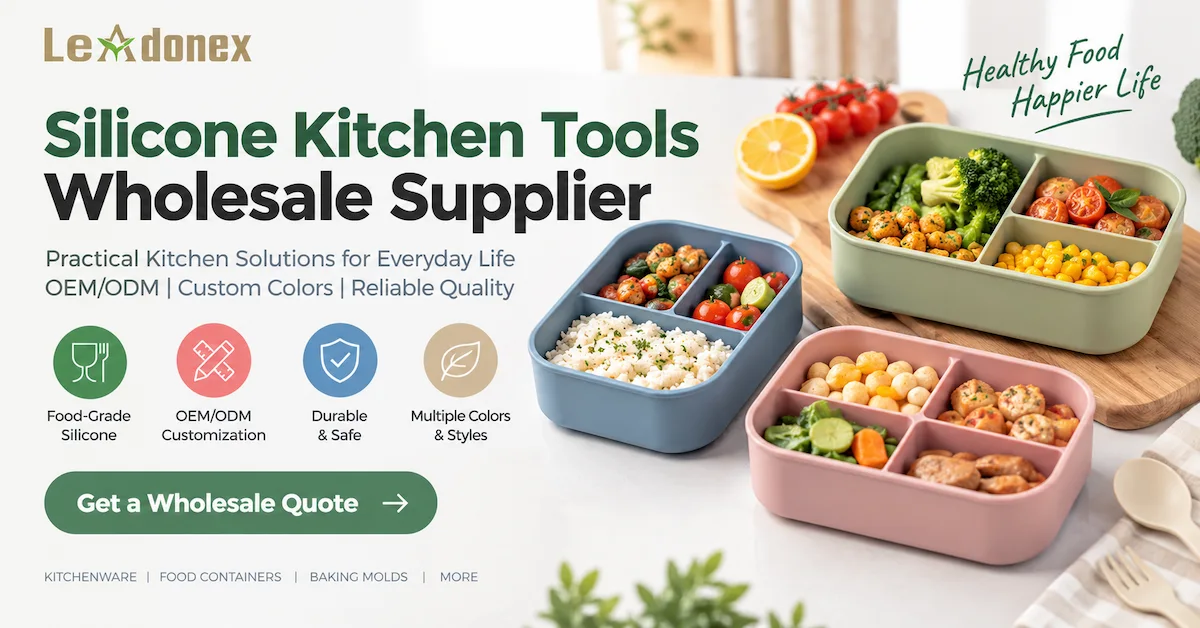
Silicone Food Containers
Important variables include:
- Capacity
- Shape
- Compartment layout
- Folding structure
- Lid design
- Wall thickness
- Stackability
- Color
- Branding
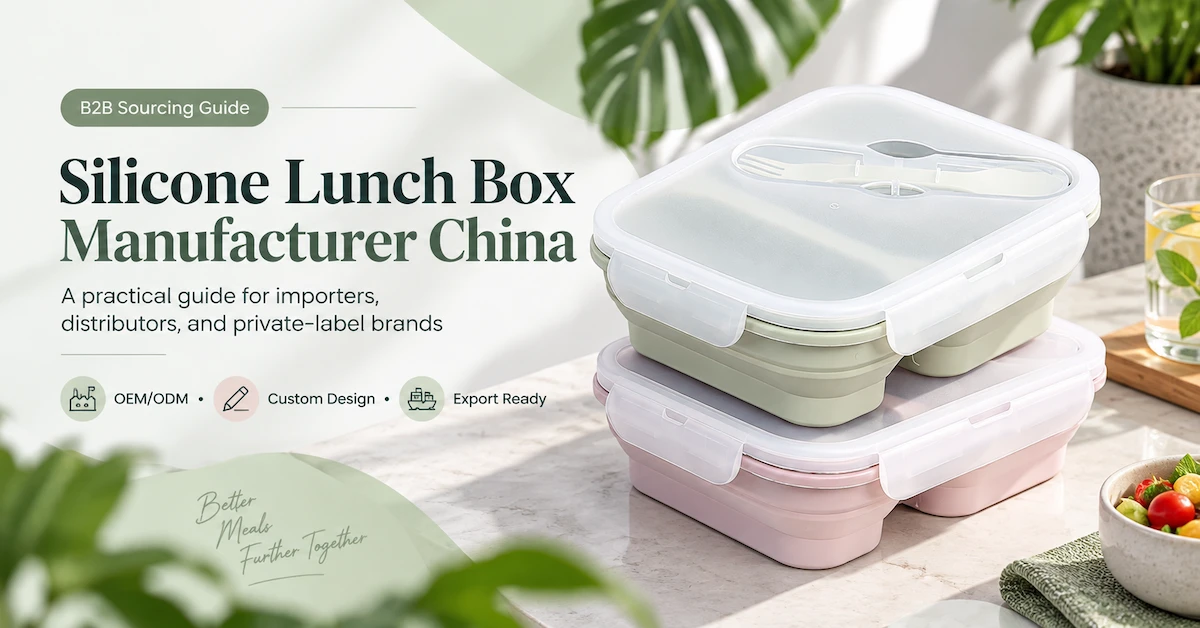
A collapsible food container, for example, has more engineering variables than a basic silicone mat because folding stability, lid fit, product recovery, and repeated-use behavior all need to be considered.
Silicone Cooking Accessories
Depending on the manufacturer's tooling and process capabilities, OEM projects may also involve cooking utensils and other molded silicone accessories.
The buyer should define the operating environment before choosing a material or structure.
Existing Mold, Modified Mold, or New Mold?
This is one of the first commercial decisions in a silicone kitchenware OEM project.
Option 1: Use an Existing Mold
This is normally the lowest-complexity route.
You may customize:
- Color
- Logo
- Packaging
- Labels
- Product combinations
Advantages include:
- Lower development cost
- Faster sampling
- Lower project risk
- Proven product structure
The disadvantage is weaker exclusivity.
Option 2: Modify an Existing Product
A buyer may want a similar product but require changes to:
- Size
- Shape
- Handle
- Compartments
- Wall thickness
- Surface texture
Whether the original tooling can be modified depends on the change.
Major dimensional or structural changes frequently require new tooling.
Option 3: Develop a New Mold
A new mold is generally required when the buyer needs a proprietary:
- Shape
- Cavity
- Structure
- Function
- Size
- Surface feature
New tooling increases upfront investment but provides stronger product differentiation.
For established brands, the more relevant question is therefore not:
“Can I avoid mold cost?”
It is:
“Will this product generate enough long-term sales to justify proprietary tooling?”
What Information Should You Prepare Before OEM Development?
Poor specifications create inaccurate quotations and unnecessary sample revisions.
Before approaching a silicone kitchenware manufacturer, prepare as much of the following information as possible.
Product Information
- Product name
- Reference photo
- 2D drawing
- 3D drawing
- Dimensions
- Weight target
- Capacity
- Functional requirements
Material Information
- Food-contact application
- Silicone type if known
- Hardness requirement
- Temperature conditions
- Color requirement
- Target market
Commercial Information
- Initial order quantity
- Estimated annual volume
- Target cost
- Launch date
- Packaging requirement
- Shipping destination
Compliance Information
Specify where the product will be sold.
For example:
- United States
- European Union
- United Kingdom
- Japan
- Other destination markets
This matters because food-contact requirements should be defined around the intended use and destination market rather than treated as one universal “food-grade” certificate.
Food-Contact Compliance Should Be Defined Before Tooling
Silicone kitchenware frequently comes into direct or indirect contact with food.
For that reason, compliance planning should begin during specification development.
United States
The U.S. FDA considers cookware among articles that can involve food-contact substances. FDA authorization for food-contact substances depends on identity, intended use, and conditions of use rather than simply the presence of the word “silicone” in a database.
Professional buyers should therefore avoid treating:
“FDA approved silicone”
as sufficient documentation by itself.
Instead, determine:
- What material is being used?
- What food will contact it?
- At what temperature?
- For how long?
- What conditions of use apply?
Buyers targeting the U.S. can review the official FDA Food Contact Substances resources.
European Union
In the EU, kitchenware is considered a food-contact material, and products placed on the EU market must comply with the general requirements of Regulation (EC) No 1935/2004. Good Manufacturing Practice requirements under Regulation (EC) No 2023/2006 also apply to food-contact material manufacturing.
The European Union Reference Laboratory for Food Contact Materials also provides testing conditions specifically covering silicone and rubber kitchenware.
For technical reference, buyers can consult the European Commission Food Contact Materials guidance.
What Should Buyers Request?
Depending on the destination market and product, procurement files may include:
- Material specifications
- Supplier declarations
- Test reports
- Migration testing
- REACH-related documentation
- Other market-specific compliance records
The required documentation should be confirmed for the exact product and target market.
Solid Silicone vs LSR for OEM Kitchenware
Silicone kitchenware can be manufactured through different molding processes.
Leadonex lists both silicone compression molding and Liquid Silicone Rubber molding among its manufacturing capabilities.
Solid Silicone Compression Molding
Compression molding is widely suitable for many solid silicone kitchenware structures.
Potential advantages include:
- Mature manufacturing process
- Practical tooling economics
- Flexible product geometry
- Suitability for many molds and containers
Liquid Silicone Rubber
LSR molding can be considered for products requiring:
- More complex geometry
- Higher repeatability
- Precision features
- Automated production
- Consistent high-volume output
How Should Buyers Choose?
| Requirement | Process to Evaluate |
| Simple solid silicone mold | Compression molding |
| Conventional baking product | Compression molding |
| Tight geometry | LSR may be appropriate |
| Complex detailed structure | Evaluate LSR |
| Cost-sensitive molded product | Compare compression options |
| Large automated production | Evaluate LSR |
| Existing proven product | Follow validated manufacturing process |
The best process depends on the product rather than on marketing claims about one technology being universally superior.
What Can Be Customized in a Silicone Kitchenware OEM Project?
Leadonex's customization program lists material, structure, colors, logos, printing, molds, and packaging among the available project variables.
Material
Depending on the application, buyers may specify:
- Silicone type
- Hardness
- Tensile properties
- Tear resistance
- Food-contact requirements
Size and Structure
A new product may require changes to:
- Length
- Width
- Height
- Capacity
- Cavities
- Compartments
- Wall thickness
- Folding structure
Color
Pantone-based color development is particularly useful for private label brands because color becomes part of product identity.
Buyers should approve a physical color sample rather than relying only on screen colors.
Logo
Possible branding methods may include:
- Molded logo
- Embossed logo
- Debossed logo
- Printing
- Laser marking
The best method depends on product geometry, desired appearance, durability requirements, and cost.
Packaging
OEM packaging may range from basic bulk packaging to:
- Polybags
- Sleeves
- Color boxes
- Gift boxes
- Inserts
- Labels
- Multi-piece sets
Packaging should be developed early because it affects retail presentation, carton utilization, freight cost, labeling, and customer experience.
How Does an OEM Silicone Kitchenware Project Move to Production?
A structured development process helps reduce mistakes.
Step 1: Requirement Review
The manufacturer evaluates:
- Product purpose
- Drawings
- Target market
- Quantity
- Material
- Compliance
- Packaging
Step 2: Design for Manufacturing
Engineers assess whether the proposed design is suitable for silicone molding.
Potential issues can include:
- Wall thickness
- Parting line
- Demolding
- Undercuts
- Structural weakness
- Excess material
- Difficult cavities
Step 3: Material and Color Selection
Material properties and target color are defined before final sampling.
Step 4: Tooling
If a new mold is required, tooling is developed according to the approved design.
Step 5: Sampling
The buyer should evaluate more than visual appearance.
Check:
- Dimensions
- Flexibility
- Function
- Color
- Surface
- Odor
- Fit
- Packaging
Step 6: Sample Approval
Create a clear approved standard.
This sample can later become the reference for bulk inspection.
Step 7: Mass Production
Production begins after specifications, samples, and commercial requirements are confirmed.
Step 8: Final QC and Packaging
Finished products should be checked against the approved standards before shipment.
Leadonex describes an end-to-end process covering design, material selection, prototype development, tooling, molding, post-processing, QC, packaging, storage, and shipping.
How Should Buyers Control Silicone Kitchenware OEM Quality?
OEM quality cannot rely on inspecting a few finished products at the end.
A stronger system controls quality throughout production.
Raw Material Control
Verify:
- Material specification
- Batch consistency
- Color formulation
- Required documentation
Mold and Process Control
Monitor:
- Mold condition
- Product dimensions
- Curing conditions
- Molding consistency
Appearance Inspection
Common issues include:
- Flash
- Bubbles
- Color differences
- Surface contamination
- Incomplete molding
- Deformation
Functional Inspection
Depending on the product, test:
- Folding
- Lid fit
- Stability
- Flexibility
- Compartment function
- Product recovery
- Assembly
Packaging Inspection
Check:
- Correct SKU
- Color
- Logo
- Labels
- Quantity
- Packaging
- Carton markings
Leadonex states that its facility has dedicated quality management and inspection teams. The company currently lists a factory area of approximately 15,300 m², 135 employees, and overall daily production capacity of up to 38,000 sets.
These figures describe overall factory capability and should not be interpreted as guaranteed daily capacity for every individual OEM product.
What Determines Silicone Kitchenware OEM Cost?
OEM pricing consists of more than unit manufacturing cost.
Tooling Cost
New tooling depends on factors such as:
- Product dimensions
- Complexity
- Number of cavities
- Precision
- Mold construction
- Expected output
Silicone Consumption
Larger and heavier products require more raw material.
Reducing unnecessary weight through engineering can influence unit economics, but reducing thickness without considering function may create quality problems.
Production Complexity
Complex structures may require:
- Longer cycles
- More handling
- More difficult demolding
- Additional QC
Color and Branding
Costs can change when a project involves:
- Multiple colors
- Specialized printing
- Logo processing
- Multiple variants
Packaging
Premium retail packaging can significantly change the final cost per saleable unit.
Order Quantity
Quantity affects:
- Setup efficiency
- Material purchasing
- Packaging purchasing
- Printing
- Production scheduling
For professional buyers, the right metric is therefore:
total project economics
rather than simply:
lowest EXW price per piece.
MOQ and Lead Time: Why There Is No Universal Answer
A common search question is:
“What is the MOQ for silicone kitchenware OEM?”
There is no reliable universal MOQ.
It changes according to:
- Existing vs new mold
- Product dimensions
- Material
- Colors
- Printing
- Packaging
- Production method
- Order complexity
The same is true for lead time.
A private-label order using an existing mold can usually follow a simpler development path than a completely new product requiring engineering, mold production, sampling, correction, testing, and packaging development.
Buyers should therefore separate:
sample lead time
from:
tooling lead time
and:
mass-production lead time.
Seven Common OEM Sourcing Risks
1. Starting Tooling Before Specifications Are Frozen
Late structural changes can result in expensive mold revisions.
Solution: Confirm dimensions, functions, material, and drawings before tooling approval.
2. Choosing Material Only by Price
Cheaper material does not necessarily match the intended use or destination-market requirements.
Solution: Define material performance and compliance requirements first.
3. Approving Color Digitally
Monitor colors are not reliable production standards.
Solution: Use Pantone references and physical sample approval.
4. Ignoring Product Weight
Product weight directly influences silicone consumption.
Solution: Evaluate wall thickness and structure during engineering.
5. Treating Compliance as a Final-Step Problem
Late testing problems can delay launch or require redesign.
Solution: Define destination-market requirements before production.
6. Approving the Product but Not the Packaging
Incorrect labels, packaging dimensions, or carton quantities can create commercial problems even when the product itself is acceptable.
Solution: Include packaging in the approval process.
7. Choosing a Supplier Only by Unit Price
Weak tooling, engineering, quality control, or communication can cost more than an initial price difference.
Solution: Compare total manufacturing capability and project risk.
How to Compare Silicone Kitchenware OEM Manufacturers
Use a structured supplier evaluation.
| Evaluation Area | Buyer Question |
| Product development | Can you work from drawings or concepts? |
| Mold capability | Is tooling developed and maintained in-house? |
| Material | Can you recommend material by application? |
| Manufacturing | Which silicone molding processes are available? |
| Sampling | How is sample approval managed? |
| Color | Can you match Pantone references? |
| Branding | Which logo methods are available? |
| Compliance | Can documentation/testing support my market? |
| QC | What is inspected during production? |
| Packaging | Can retail packaging be customized? |
| Capacity | Can the factory support repeat orders? |
| Communication | How are engineering changes controlled? |
Leadonex describes itself as an OEM/ODM manufacturer of food-grade silicone products with more than 20 years of experience, while its customization page lists multiple manufacturing processes, mold development, quality systems, and private-label options.
Buyers can learn more about the manufacturer on the Leadonex About Us page.
How to Request a Better OEM Quotation
Instead of sending:
“Please quote silicone kitchenware.”
send a structured RFQ.
Include:
- Product image or drawing
- Dimensions
- Silicone material requirement
- Hardness if known
- Product weight if available
- Pantone color
- Logo method
- Packaging requirement
- Initial quantity
- Annual forecast
- Target market
- Required tests/documentation
- Delivery destination
- Target schedule
For example:
We need a custom silicone baking mold for the U.S. market. The product requires six cavities, custom Pantone color, embossed logo, individual retail box, an initial order of 5,000 pieces, and an annual forecast of 30,000 pieces. Please evaluate tooling, material, sample cost, MOQ, production lead time, and applicable food-contact documentation.
This gives the manufacturer enough information to evaluate the actual project.
Buyers with drawings or product concepts can submit their project through the Leadonex contact page.
FAQ About Silicone Kitchenware OEM
1. What does silicone kitchenware OEM mean?
It means manufacturing silicone kitchen products according to a buyer's branding, specifications, or designs. OEM can range from changing colors and packaging on an existing item to manufacturing a proprietary product with new tooling.
2. Can I add my own logo to existing silicone kitchenware?
Yes, depending on the product. Options can include molded logos, embossed or debossed branding, printing, laser marking, and customized packaging.
3. Do I need a new mold for private label silicone kitchenware?
Not necessarily. Color, logo, labels, and packaging can often be customized without changing the core mold. Structural or dimensional changes are more likely to require new tooling.
4. Can a silicone kitchenware OEM factory manufacture from my drawing?
A manufacturer with product engineering and mold-development capabilities can evaluate 2D or 3D drawings and determine whether the proposed product is suitable for silicone manufacturing.
5. What is the MOQ for OEM silicone kitchenware?
MOQ depends on product size, material, molding process, colors, printing, packaging, and whether existing or new tooling is used. Request a project-specific MOQ rather than relying on one generic number.
6. How much does a custom silicone mold cost?
Tooling cost depends on dimensions, geometry, number of cavities, precision, mold structure, and expected production volume. A drawing or 3D file is normally required for a meaningful quotation.
7. Is silicone kitchenware automatically FDA compliant?
No. FDA requirements for food-contact substances depend on the specific substance, intended use, and conditions of use. Buyers should verify the relevant material and documentation for their actual application.
8. Can OEM silicone kitchenware use custom Pantone colors?
Yes, Pantone color matching is commonly used for private-label projects. Buyers should approve a physical production sample because digital colors can differ from molded silicone.
9. How long does an OEM silicone kitchenware project take?
It depends on whether an existing mold is used. Projects involving new design, tooling, sampling, revisions, testing, and custom packaging require a longer development cycle than simple private-label orders.
10. What should I check before approving mass production?
Confirm the final drawing, dimensions, material, hardness, color, functionality, logo, packaging, compliance requirements, approved sample, inspection criteria, quantity, and shipment details.
Conclusion
A successful silicone kitchenware OEM project is not created by choosing a catalog item and adding a logo at the end.
The strongest projects connect:
market requirement → product specification → material → engineering → tooling → sampling → compliance → QC → branding → packaging → scalable production.
For buyers entering the market, an existing mold with private-label customization can reduce development cost and risk. For established kitchenware brands, proprietary structures and molds can create stronger product differentiation and protect long-term commercial value.
Leadonex supports silicone kitchenware OEM and ODM projects through product development, compression and LSR molding, mold manufacturing, color and logo customization, quality inspection, private-label packaging, and bulk production. Its current website lists approximately 15,300 m² of factory space, 135 employees, and overall daily capacity of up to 38,000 sets.
Explore Leadonex Kitchenware & Molds, review its OEM/ODM customization capabilities, or contact Leadonex with your drawings, target market, estimated quantity, color, packaging, and compliance requirements to evaluate your next silicone kitchenware OEM project.