
What Does a Silicone Kitchen Tools ODM Supplier Actually Do?
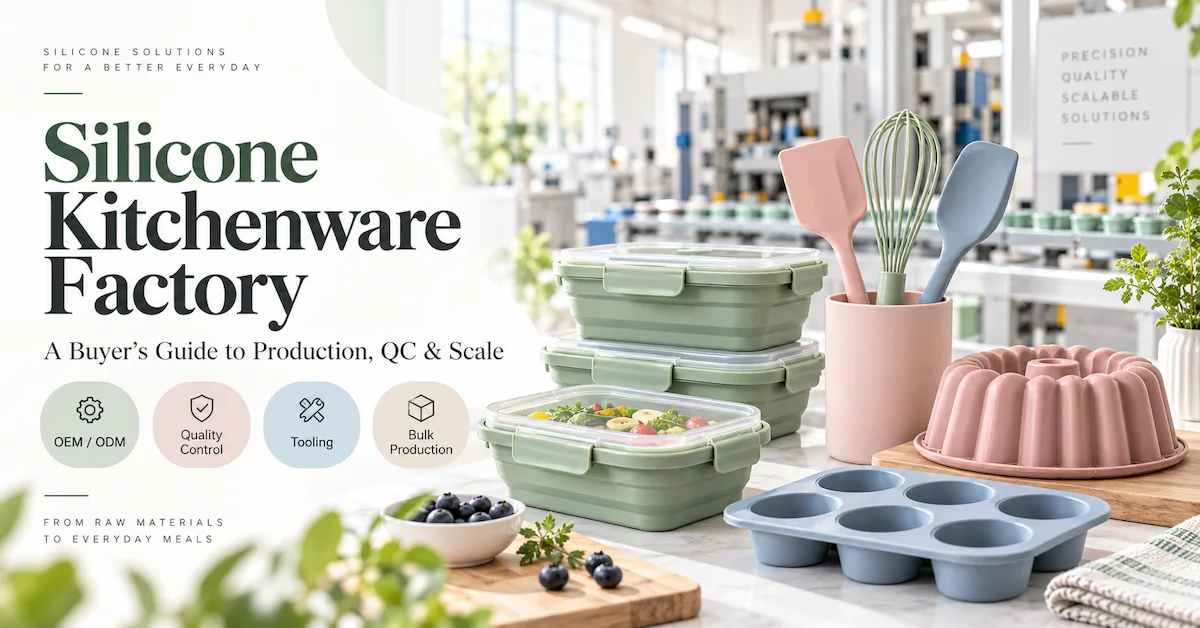
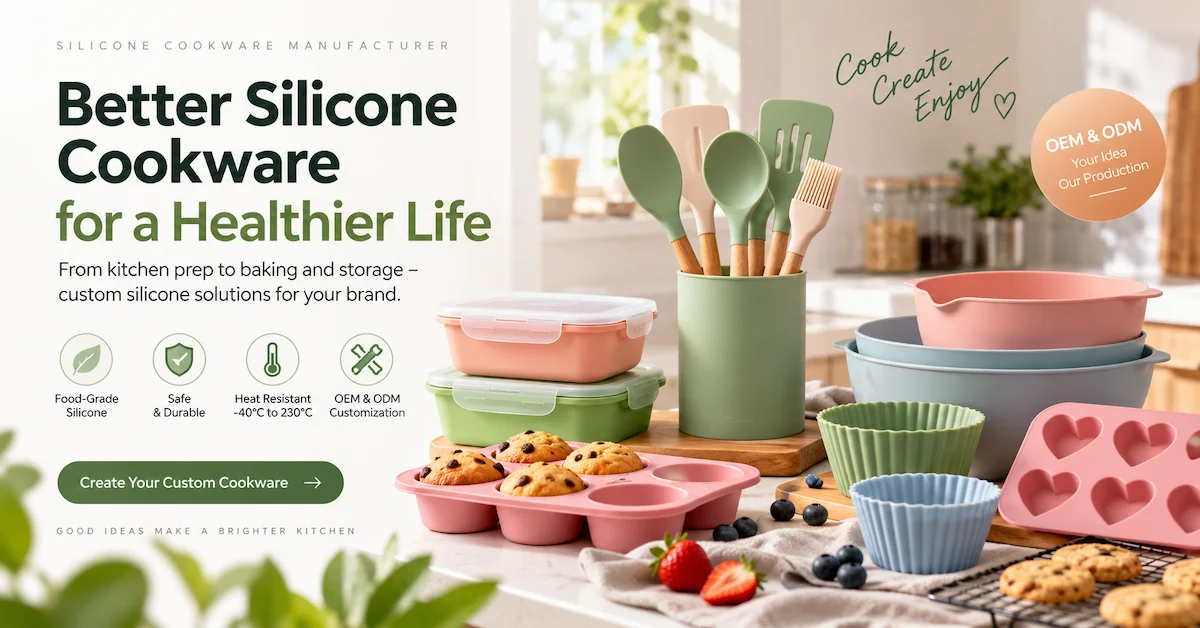
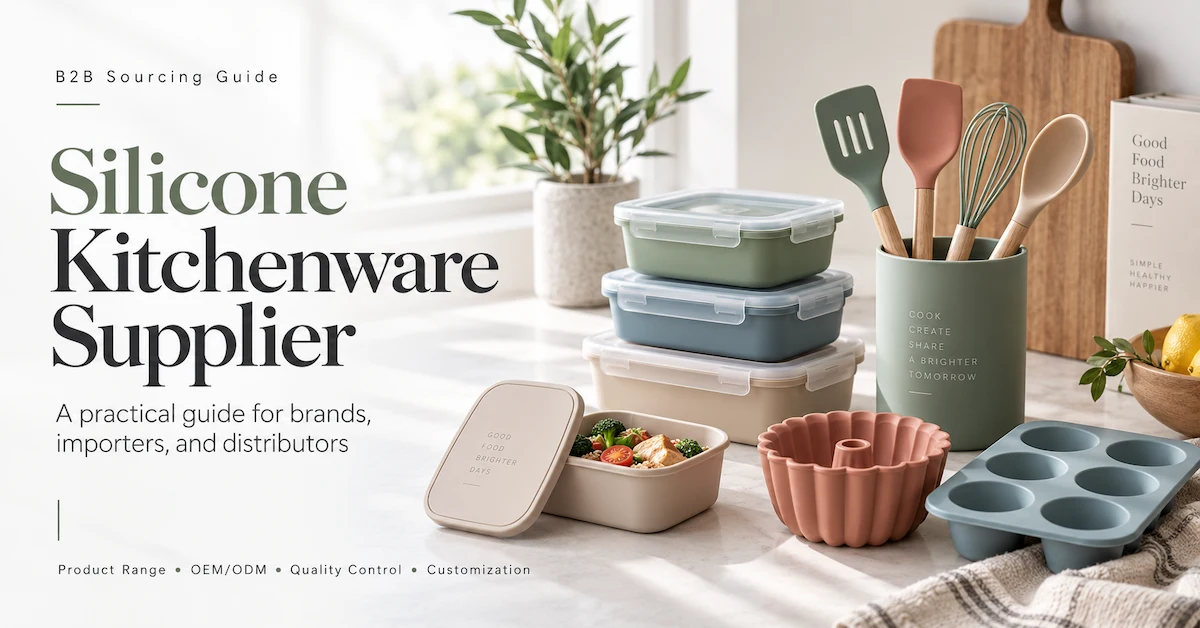
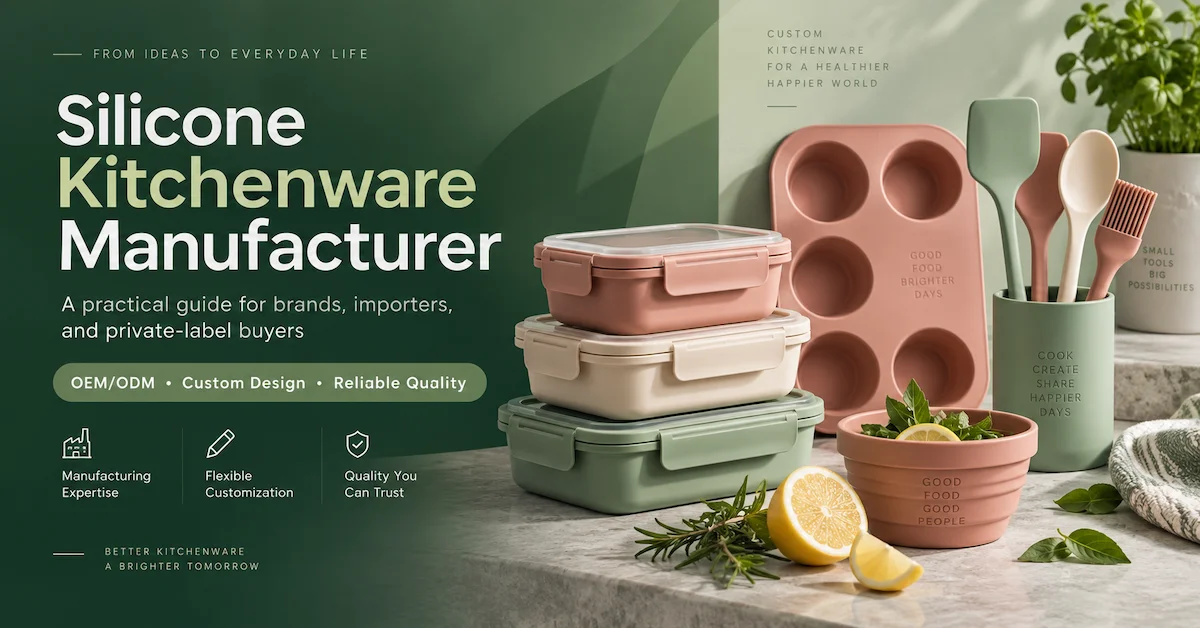
A silicone kitchen tools ODM supplier should do more than supply an existing product and print a logo on it. For buyers developing a private-label range, ODM normally involves some level of product definition, structure adjustment, color development, tooling coordination, sampling, packaging preparation, and production approval before the first commercial order is released. The exact boundary between OEM and ODM can vary from project to project, so buyers should define responsibilities at the beginning rather than relying only on the label “ODM.” Leadonex presents OEM/ODM services alongside customization support, while its current Kitchenware & Molds structure covers silicone food containers and mold-related categories. This provides a practical starting point for buyers who want either to adapt an existing concept or develop a more differentiated silicone kitchenware product.
Which Buyers Benefit Most from ODM Development?
ODM is most useful when a buyer wants differentiation but does not yet have a completely production-ready specification. A kitchenware brand may know the target retail price, user group, color direction, and basic product function but still need help translating those requirements into dimensions, component structures, sample versions, and packaging. Importers may use ODM to create exclusive configurations that reduce direct price comparison with generic products, while distributors may want coordinated products that fit an existing kitchenware collection. E-commerce private-label sellers can also use ODM when they want more differentiation than a simple logo change provides. By contrast, buyers who only need an existing product in a standard color may not need a full ODM process, and buyers with a complete drawing, bill of materials, tooling design, and inspection specification may be closer to a conventional OEM manufacturing project. Defining the project type early helps avoid paying for unnecessary development or, in the opposite case, assuming that a basic wholesale quotation includes design work that has not actually been scoped.
Start with the Kitchen Application, Not with the Product Shape
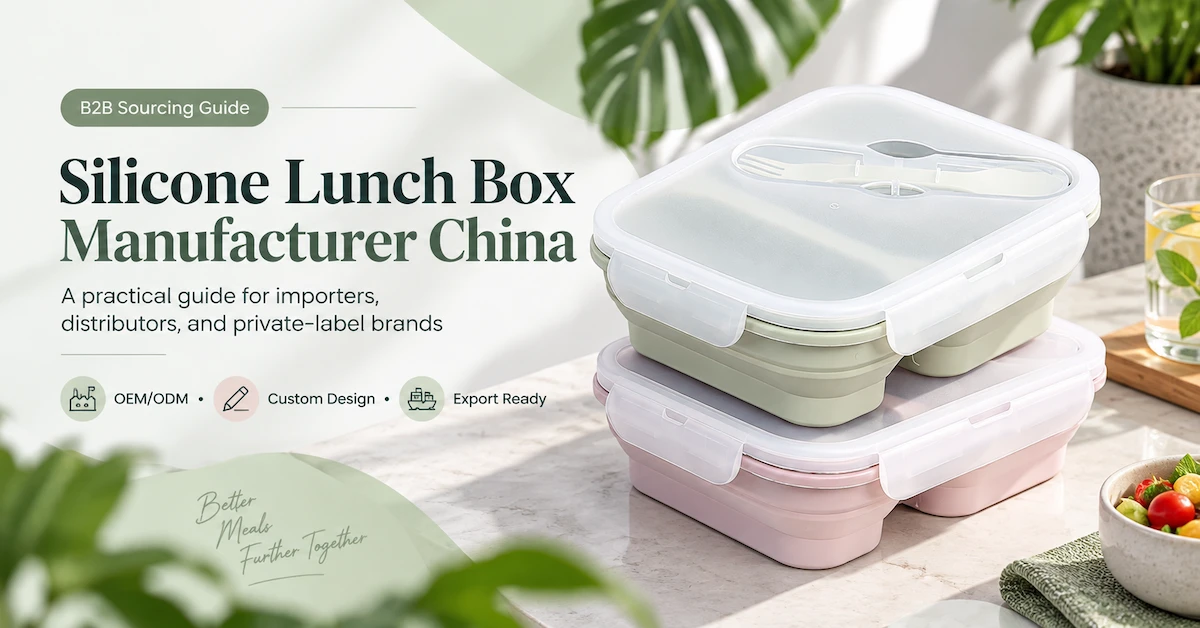
Before asking a silicone kitchen tools ODM supplier to recommend a design, define where and how the product will be used. A foldable food container for office lunches faces different design questions from a silicone baking mold used for portioned desserts, and a compact travel container may prioritize storage volume differently from a home food-storage product. The intended sales channel matters as well: supermarket products need retail-ready packaging and consistent shelf presentation, online products need packaging that protects the item through parcel delivery, and gift sets may require coordinated colors and multiple components. Buyers should therefore describe the user, application, selling country or region, expected order volume, sales channel, desired positioning, and the problems the product is intended to solve. This information helps convert a vague request such as “develop a silicone kitchen product” into a project that can actually be reviewed, sampled, costed, and manufactured.
Match the Broad “Silicone Kitchen Tools” Search Term to Real Product Categories
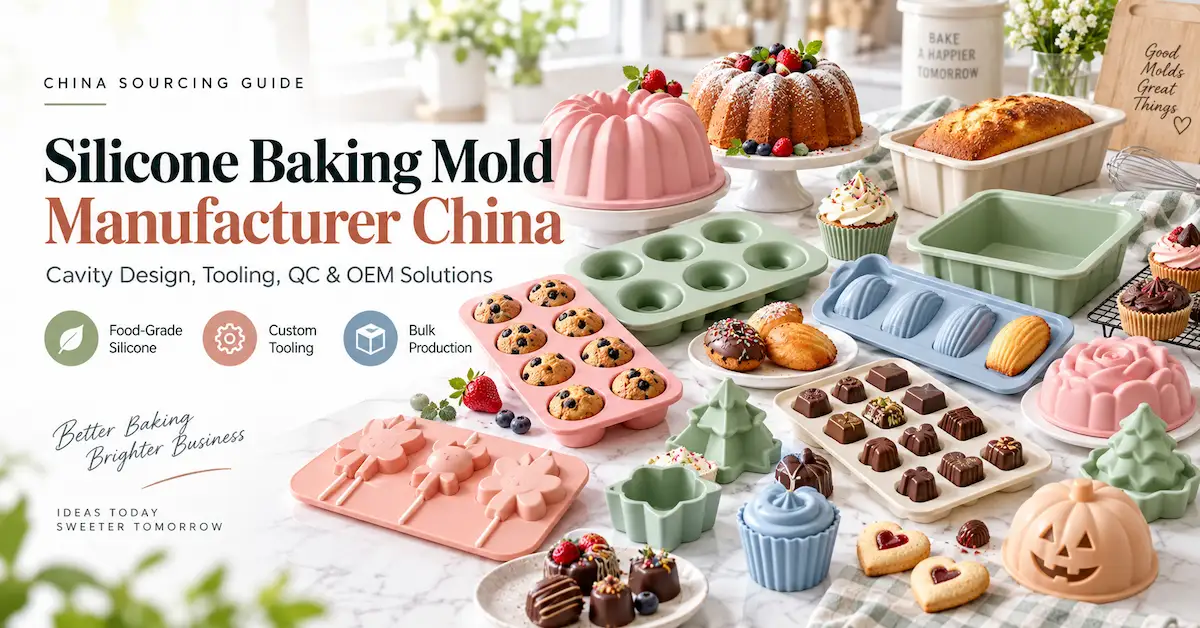
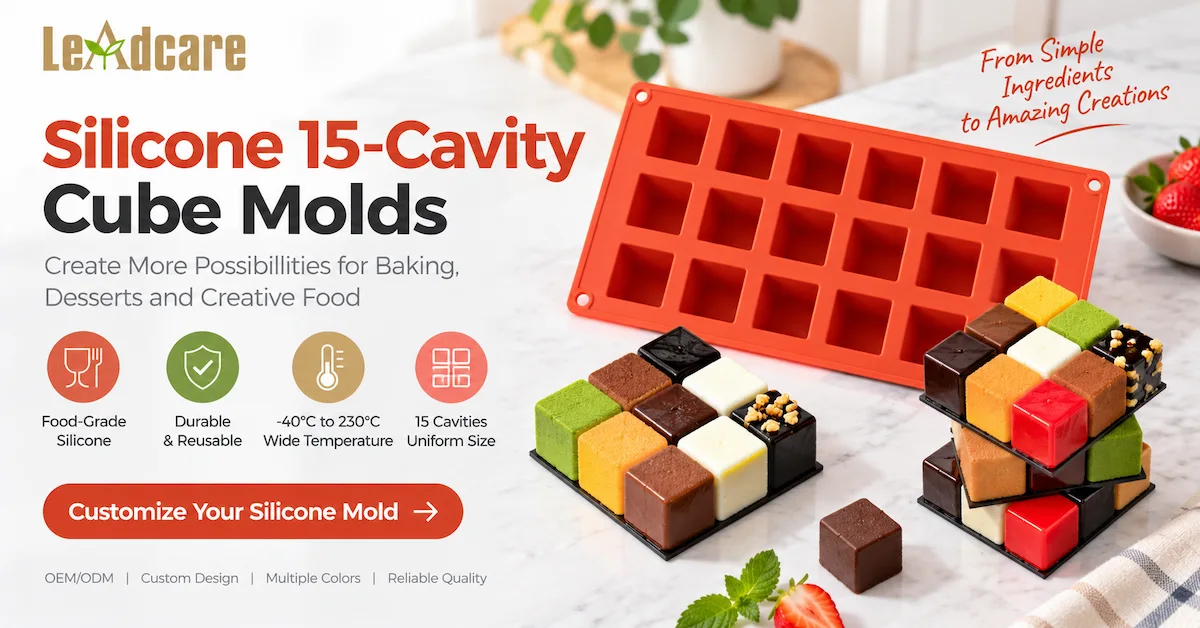
“Silicone kitchen tools” is a broad purchasing term and may refer to food containers, baking tools, molds, utensils, preparation accessories, or complete kitchen sets. Buyers should not assume that every supplier using the phrase maintains every possible item as a standard product. Leadonex currently organizes its kitchen-related products through its Kitchenware & Molds category, with subcategories including silicone cake molds, silicone ice molds, silicone chocolate molds, silicone food containers, and silicone lollipop molds. Buyers can also review the wider product catalog before defining an ODM brief. If a project requires a product that is not shown as a current catalog item, such as a specific spatula, brush, scraper, or multi-piece cooking utensil set, it is more reliable to submit that requirement as a custom-development inquiry rather than treating it as a confirmed standard model. This approach keeps the sourcing process based on actual product availability and development capability instead of assumptions created by a broad category keyword.
Build a Technical Specification Before Asking for a Final ODM Price
A useful ODM quotation requires more than a photograph and target quantity. Buyers should gradually convert the concept into a controlled specification that can later become the reference for sample approval and mass-production inspection. Dimensions, capacity, component materials, product weight, surface finish, color, logo position, accessories, packaging, and intended use should be recorded whenever they are relevant. Functional requirements should also be measurable wherever possible; instead of writing “strong,” “premium,” or “easy to use,” define what needs to be checked on the sample. For collapsible food containers, this may include expanded dimensions, collapsed dimensions, lid fit, closure operation, stability when filled, and the behavior of folding sections. For molds, cavity dimensions, spacing, filling behavior, handling, and release performance may be more relevant. A clear specification also prevents a common sourcing problem in which the buyer approves one sample while purchasing later relies on a different description.
| Specification Area | What the Buyer Should Define | What Should Be Approved |
|---|---|---|
| Product concept | Intended use, target user, sales channel | Written project brief |
| Dimensions | Overall size, capacity, critical dimensions | Drawing or measured sample |
| Components | Body, lid, handle, accessories, reinforcement if applicable | Component list |
| Material requirements | Required material characteristics for each component | Supplier material specification |
| Color | Pantone or approved reference color | Physical color sample |
| Branding | Logo method, location, dimensions | Artwork and branded sample |
| Function | Folding, closing, gripping, releasing, storing, or other relevant tasks | Functional sample |
| Packaging | Unit pack, set contents, labels, inserts, carton configuration | Packaging sample |
| Quality criteria | Appearance, dimensions, function, accessories, packing | Written inspection standard |
Evaluate Materials by Component Instead of Using One Generic “Food-Grade Silicone” Statement
Material discussions become more useful when the buyer looks at the complete construction rather than only the main silicone body. A kitchen product may combine silicone with a lid, insert, handle, reinforcement, cutlery, or other accessory, and these parts can have different use conditions. A silicone kitchen tools ODM supplier should therefore identify the proposed material or construction for each relevant component and explain why it suits the intended application. Buyers should also specify what type of documentation is required for their destination market and product use, then review whether the documents actually correspond to the material, product, color, and intended condition being purchased. A broad statement such as “food grade” should not replace product-specific verification. The same principle applies to heat, cold, cleaning, dishwasher, microwave, freezer, or other use claims: confirm which component the condition applies to and what supporting information is available before printing the claim on packaging or product pages.
Use ODM to Improve Product Structure, Not Simply to Change the Color
Color customization is useful for private-label branding, but structural development is where ODM can create greater differentiation. A buyer may want to change product dimensions, adjust compartment ratios, modify a cavity pattern, improve storage efficiency, change the location of a lid feature, integrate accessories, or create a distinctive external shape. Leadonex’s customization service can be used to submit requirements for projects that go beyond standard product selection. The important purchasing question is not simply “Can this be customized?” but “Which changes require only artwork or color development, which require product engineering, and which require new tooling?” These three levels have different effects on sampling time, development cost, minimum order conditions, and the risk of later revisions. Buyers should therefore freeze the major functional requirements before investing in custom tooling and avoid making unnecessary structural changes after the mold-development stage has started.
Choose the Right Development Route for Your Budget and Differentiation Goal
Because specific model codes and prices should not be invented merely to fill a comparison table, buyers can compare ODM projects through three practical development routes. The right route depends on how much differentiation is required, how quickly the product must reach the market, and how much development work the buyer is prepared to manage.
| Development Route | Typical Changes | Main Advantage | Main Limitation | Best For |
|---|---|---|---|---|
| Existing product + private label | Color, logo, packaging, set combination where available | Lower development complexity | Limited structural differentiation | Importers, distributors, initial market testing |
| Semi-custom ODM | Existing platform with selected dimensional, component, accessory, or configuration changes | Better differentiation without starting completely from zero | Changes may still be restricted by existing tooling | Established private-label brands |
| New-product ODM | New geometry, structure, dimensions, tooling, packaging concept | Highest potential differentiation | Higher development cost, more sampling and approval work | Brands building exclusive product lines |
Treat Sampling as an Engineering Approval Stage
A sample is not only a visual reference. It should answer the questions that determine whether the product is ready for production. Buyers should review dimensions, weight where relevant, component fit, surface finish, color, logo, packaging, and every function that matters to the intended use. Comments such as “quality needs improvement” are difficult for any supplier to implement consistently; comments should instead identify the exact issue, the location, the expected result, and the approval reference. When a second or third sample is produced, the buyer should check whether a change solved one problem without creating another. After the final sample is accepted, record the approved version and connect it to the drawing, material information, color reference, artwork, packaging specification, and inspection requirements. The more disciplined the sample approval process is, the less room there is for disagreement after mass production has already started.
Ask How Tooling and Workmanship Will Be Controlled
For a custom silicone product, mold design directly influences product geometry, surface appearance, parting lines, cavity consistency, dimensional control, and manufacturing repeatability. Buyers do not need to manage every tooling detail themselves, but they should understand which parts of the design are fixed after tooling begins and which changes remain practical. Confirm drawing approval, tooling scope, sample revision responsibilities, ownership arrangements where applicable, storage, maintenance expectations, and the process for future design changes. Workmanship should then be evaluated through observable criteria such as surface defects, edges, flash, deformation, color consistency, logo appearance, component fit, and functional operation. If a supplier uses both internal and coordinated external resources for parts of development or tooling, what matters to the buyer is that responsibility, specifications, approvals, and quality controls remain clear throughout the project.
Create Quality Requirements Before Bulk Production Starts
Quality control becomes far more effective when acceptance standards are agreed before production rather than negotiated after defects are found. The buyer and silicone kitchen tools ODM supplier should identify which dimensions are critical, which appearance defects are unacceptable, what functional checks should be performed, how accessories and packaging will be verified, and what records are expected before shipment. Product-specific documentation should also be reviewed during development instead of being requested only when goods are ready to ship. If the target market requires particular testing or declarations, tell the supplier before materials, colors, or constructions are finalized. For repeat orders, establish a simple change-control rule: material, tooling, component, color, logo, packaging, or significant process changes should be communicated and approved when they affect the agreed specification. This protects both sides from relying on assumptions about what “same as last order” actually means.
Do Not Treat MOQ, Capacity, and Lead Time as Universal Numbers
MOQ and delivery time should be confirmed for the exact project rather than copied from another product page or previous order. An existing product using a standard configuration may have very different commercial conditions from a new mold project involving custom colors, accessories, printed packaging, and product testing. Buyers should ask whether MOQ applies per model, per color, per packaging version, per set, or per total order. Lead time should be divided into development stages: requirement confirmation, design review, tooling where necessary, sample production, sample revision, packaging approval, mass production, inspection, and shipment preparation. Production capacity should likewise be discussed in the unit that matters to the purchase—pieces, sets, molds, production cycles, or another relevant measure—rather than using a factory-wide number without context. Leadonex describes an OEM/ODM workflow through its OEM/ODM page, but final timing and commercial conditions should still be confirmed against the actual product and order configuration.
Compare ODM Cost by Project Scope, Not Only by Unit Price
ODM sourcing costs can include more than the finished-product unit price. Depending on the project, buyers may need to consider product development, tooling, color development, samples, logo setup, testing, packaging design, packaging materials, inspection, cartons, and freight-related requirements. Two quotations that look very different may not be quoting the same scope. A lower product price can become less attractive if essential packaging, development, inspection, or accessory costs are excluded, while a higher quotation may include work that would otherwise be charged separately. Ask suppliers to state assumptions and exclusions clearly and compare quotations against the same specification. The most useful cost comparison is not “Which supplier has the lowest number?” but “What does each number include, and will the resulting product meet the same approved requirement?” This is especially important when developing a new private-label collection, because small changes made late in the process can affect tooling, samples, packaging, and delivery schedules simultaneously.
Reduce ODM Risk by Controlling Product Versions
Version control may sound like an engineering topic, but it solves many ordinary purchasing problems. A kitchenware project can quickly produce several drawings, color samples, logo files, packaging artworks, and sample revisions. If the purchasing team refers to one version while production follows another, even technically acceptable goods can become commercially unusable. Give each important document a clear revision number or date, identify which sample is approved, and record changes in writing. When repeat orders are placed, reference the approved version instead of sending only a previous photograph or purchase order. If a product must be modified for a new market or sales channel, create a new controlled version rather than silently replacing the old one. This system also helps brands manage multiple suppliers, regions, and packaging languages as their product line expands.
How to Prepare an Effective RFQ for Leadonex ODM Development
A productive ODM inquiry should give enough information for the supplier to understand both the product and the commercial objective. Include the product category, reference image or drawing, intended use, target market, expected quantity, dimensions or capacity, desired colors, logo files, packaging requirement, required accessories, and desired project schedule. Explain whether the product should be based on an existing model, modified from an existing concept, or developed with a new structure. If important decisions are still open, state them as questions instead of filling the brief with guesses. Buyers can use the Leadonex customization page to present custom requirements or contact Leadonex with a structured RFQ. A detailed request allows the development discussion to begin with technical and commercial decisions instead of spending several communication rounds establishing basic product requirements.
Frequently Asked Questions
1. What is the difference between a silicone kitchen tools ODM supplier and an OEM supplier?
In practical sourcing, OEM usually places more emphasis on manufacturing according to specifications supplied by the buyer, while ODM may involve greater supplier participation in product definition, structure, customization, or development. The exact division varies between projects, so responsibilities for design, tooling, testing, packaging, and approval should always be stated in writing.
2. Can I start an ODM project from an existing Leadonex product?
Existing products can provide a practical reference for color, branding, packaging, assortment, or selected configuration discussions. Start by reviewing the Leadonex product catalog and ask which changes are possible for the specific item rather than assuming that every part of every product can be modified.
3. Can Leadonex develop a silicone kitchen product that is not currently shown on the website?
A product not shown in the current catalog should be treated as a development inquiry rather than a confirmed standard item. Provide drawings, images, dimensions, intended use, quantity, and functional requirements through the customization service so feasibility can be evaluated.
4. What information should I provide before requesting an ODM quotation?
Provide the application, target market, expected quantity, product dimensions, material requirements if already defined, colors, branding, packaging, required accessories, reference designs, and project schedule. If testing or documentation requirements apply to your market, include them at the beginning of the discussion.
5. Do I need a new mold for every custom kitchenware project?
Not necessarily. Color, logo, packaging, or some configuration changes may be possible without creating a completely new product mold, while changes to geometry, dimensions, cavity layout, or major structural features may require new tooling. Feasibility should be confirmed for the selected design.
6. How should I approve a silicone kitchenware sample?
Approve more than appearance. Check dimensions, components, color, logo, product function, surface quality, accessories, packaging, and any relevant use requirements against a written specification. Keep the final approved sample and related documents as references for bulk production.
7. How can I confirm the material used in a custom silicone product?
Request a component-level material description and any supporting documentation relevant to the proposed product and destination market. Avoid assuming that a general material statement automatically applies to every component, color, product, or use condition.
8. How is MOQ determined for an ODM order?
MOQ can depend on product structure, tooling, color, packaging, accessories, and production arrangement, so it should be confirmed for the exact project. Ask whether the stated minimum applies per product, per color, per packaging version, or to the combined order.
9. What are the biggest risks in silicone kitchenware ODM development?
Common risks include incomplete specifications, late structural changes, unclear tooling responsibilities, approving samples without measurable criteria, mismatched packaging versions, unsupported product claims, and comparing quotations that cover different scopes. Most of these risks can be reduced through written specifications and controlled approvals.
10. What should I send Leadonex to start a project?
Send the product concept or reference, target use, dimensions or capacity, expected order quantity, sales market, desired colors, logo artwork, packaging requirements, and any specific functional or documentation needs. A structured request through the Leadonex contact page gives the team a clearer basis for discussing the next development step.
Conclusion
Choosing a silicone kitchen tools ODM supplier is ultimately a product-development decision, not simply a search for a lower wholesale price. Brands, importers, and distributors should define the application first, then control materials, components, dimensions, tooling, samples, packaging, quality requirements, commercial conditions, and document versions as the project moves toward production. Leadonex’s current Kitchenware & Molds range, OEM/ODM services, and customization support provide several entry points for buyers evaluating a new silicone kitchenware project. Before requesting a final quotation, prepare a clear RFQ with the product concept, target market, quantity, functional requirements, branding, and packaging information; doing so makes it easier to compare development options, approve the right sample, and establish a repeatable specification for future orders.